Español



Content
- 1 Short Answer: Twelve Specs Decide Whether a Solar Street Light Order Works on Site
- 2 Power Generation Specs: Panel Output, Sun Hours and Charge Control
- 3 Energy Storage Specs: Battery Chemistry, Capacity and Autonomy
- 4 Lighting Performance Specs: Lumens, Distribution and Dimming
- 5 Durability Specs: Protection Rating, Material and Temperature Range
- 6 Layout Specs: Mounting Height, Pole Choice and Pole Spacing
- 7 Installation and Service Specs: Crew Time, Access and Spare Parts
- 8 All In One Versus Split Systems: Which Format Fits the Job
- 9 Matching Specs to Site Type: Where Each Requirement Changes
- 10 Pre-Order Checklist and Questions to Send the Supplier
- 11 Frequently Asked Questions
- 11.1 Q1. Are solar street lights worth it?
- 11.2 Q2. How long do solar street lights last?
- 11.3 Q3. How do I choose the right solar street light?
- 11.4 Q4. How far apart should solar street lights be placed?
- 11.5 Q5. How high should a solar street light pole be?
- 11.6 Q6. How to install a solar street light?
- 11.7 Q7. Which battery type suits solar street lights?
- 11.8 Q8. Do solar street lights work on cloudy days?
Short Answer: Twelve Specs Decide Whether a Solar Street Light Order Works on Site
Before ordering All In One Solar Street Light units, confirm the panel wattage, charge controller type, battery chemistry, usable battery capacity, light output, light distribution, dimming logic, ingress and impact protection, body material, temperature range, mounting height with spacing, and service access. When these twelve items match your site data, Solar Street Lights perform as designed and callbacks drop.
Contractors work against fixed schedules and fixed site conditions, so a spec sheet that looks complete can still hide a mismatch. The sections below explain what each number means, how to test it against your project, and which questions to send to a supplier before the purchase order is released. Site sun data is available from public tools such as the Global Solar Atlas and NASA POWER.
Power Generation Specs: Panel Output, Sun Hours and Charge Control
Panel wattage and module efficiency
Panel size must refill the battery on the shortest-sun day of the year, not on an average day. Peak sun hours describe the equivalent hours of full-strength sunlight per day, and they change with latitude and season. Ask for the panel wattage, the cell type, and the tilt the panel will sit at once mounted. A panel built into the lamp head has a fixed tilt, so check that the angle suits your latitude.
Charge controller type and settings
An MPPT controller tracks the panel maximum power point and usually harvests more energy than a basic PWM controller, especially in cool weather or low light. Whichever type is used, ask for the charge cut-off voltage, low-voltage disconnect level, and temperature compensation behavior. Protection against reverse polarity, over-discharge, and over-charge should be listed in the datasheet.
- Request the panel wattage and efficiency rating as measured under standard test conditions.
- Confirm whether the controller is MPPT or PWM.
- Ask whether charge parameters can be adjusted for your climate.
Energy Storage Specs: Battery Chemistry, Capacity and Autonomy
Battery chemistry
Lithium iron phosphate (LiFePO4) cells are common in modern Solar Street Lights because they tolerate repeated deep cycling and show stable thermal behavior. Lead-acid and gel batteries remain in older designs and generally offer fewer cycles. Compare the cycle count at a stated depth of discharge, not the cycle count alone.
Battery capacity and autonomy days
Autonomy is the number of nights the light can run without meaningful charging. A simple check works like this:
- A 30 W fixture running 11 hours uses 330 Wh each night.
- Three nights of autonomy requires about 990 Wh of usable energy.
- Usable energy is lower than nameplate capacity because of depth-of-discharge limits, so ask for the usable figure.
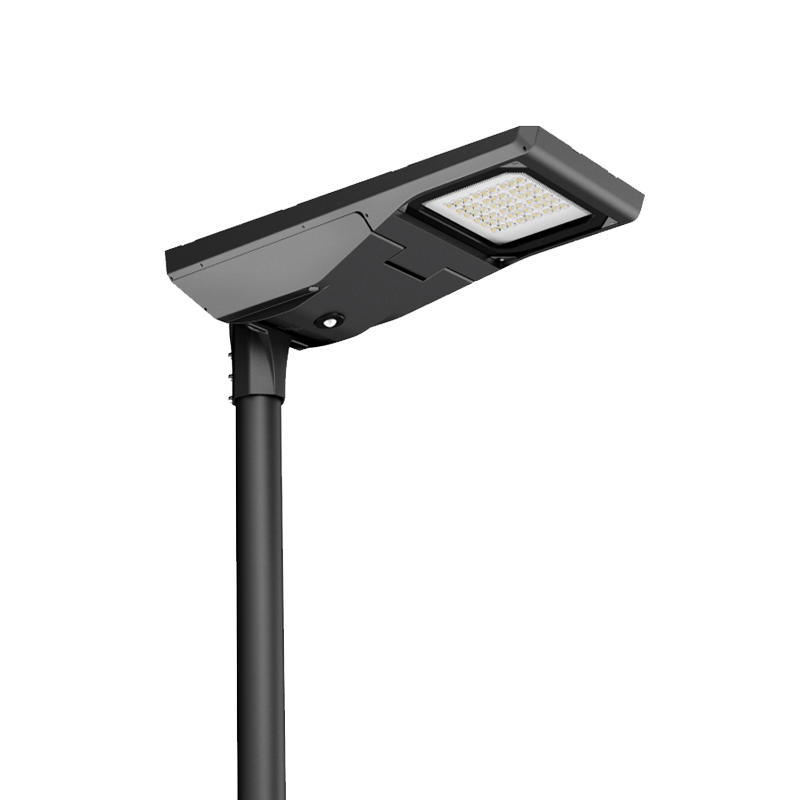
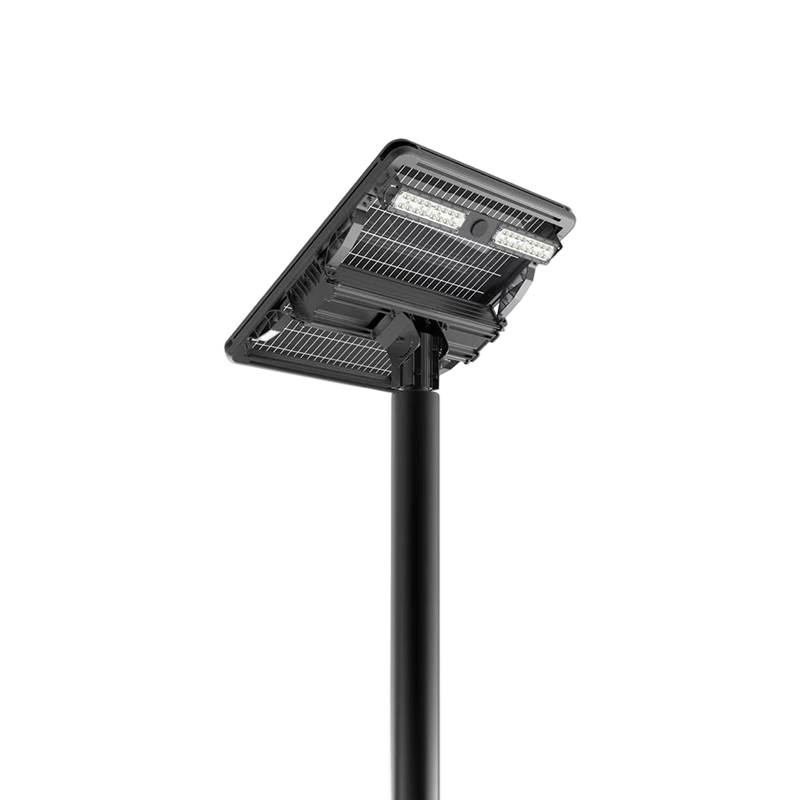
All In One Solar Street Light Series
Integrated high-efficiency photovoltaic module and high-capacity lithium battery in a die-cast aluminum body, with light and motion sensing for off-grid roads.
View Solar Street LightsLighting Performance Specs: Lumens, Distribution and Dimming
Luminous flux and efficacy
Lumens measure total light output and lumens per watt measure efficacy. Ask whether the lumen number is measured at the LED chip or at the complete fixture, because lens and driver losses lower the system figure. Higher efficacy lets the same battery run a brighter lamp, or run the same lamp longer.
Light distribution
Distribution patterns follow the IES type classification, from narrow Type II for roads to wide Type V for open areas. A good lumen figure with the wrong pattern leaves dark gaps between poles. Request an IES or LDT photometric file and run a layout check against the illuminance targets in your project brief, which often reference IES RP-8 or EN 13201 for road lighting.
Dimming and sensor logic
Motion and light sensors reduce average consumption by lowering output when nobody is present. Verify the dimming stages, the hold time after motion, and the sensor detection range. These settings decide how many cloudy nights the battery can bridge.
| Application | Mounting height | Spacing guide | Spec to prioritize |
|---|---|---|---|
| Parking lot | 6 to 8 m | 3 to 4 times height | Wide distribution |
| Highway | 10 to 12 m | Per photometric layout | Lumen output |
| Campus | 4 to 6 m | 3 to 4 times height | Low glare, dimming |
| Construction site | 4 to 6 m | By work zone | Impact rating |
| Remote villages | 5 to 6 m | About 4 times height | Autonomy days |
| Mining site | 8 to 10 m | By haul route | Dust and vibration |
Durability Specs: Protection Rating, Material and Temperature Range
IP and IK protection
IP codes, defined in IEC 60529, describe dust and water ingress. IK codes, defined in IEC 62262, describe impact resistance. Check both for the lamp head and the battery compartment.
Body material and finish
Die-cast aluminum with a durable powder coat resists corrosion and heat. For islands and coastal roads, ask how the finish handles salt spray and high humidity, and which fasteners are used.
Operating temperature
Lithium cells have charging temperature limits. Ask for the charge and discharge ranges and whether the controller pauses charging in freezing conditions.
Layout Specs: Mounting Height, Pole Choice and Pole Spacing
Height and spacing work together. A taller pole spreads light across a larger area but reduces the illuminance at ground level, and a fixture with limited output may leave gaps if poles sit too far apart. A common starting rule uses spacing of about three to four times mounting height, then a photometric layout confirms the result.
Also verify pole wall thickness, base plate dimensions, anchor bolt pattern, and the wind load the head will see, since a panel and battery add weight and surface area to the top of the pole. Tilt and orientation should face the sun path of the site.
Installation and Service Specs: Crew Time, Access and Spare Parts
An integrated design reduces field wiring, which shortens crew time. A typical install runs in this order:
- Cast or set the foundation with the anchor bolt template.
- Stand and plumb the pole.
- Lift the lamp head and secure the bracket.
- Set the panel direction using a compass.
- Switch on and run a night test.
Ask where the battery and controller sit, whether they can be swapped without removing the pole, and which spare parts the supplier can ship. The structure diagram below labels the main parts of a typical integrated unit.
All In One Versus Split Systems: Which Format Fits the Job
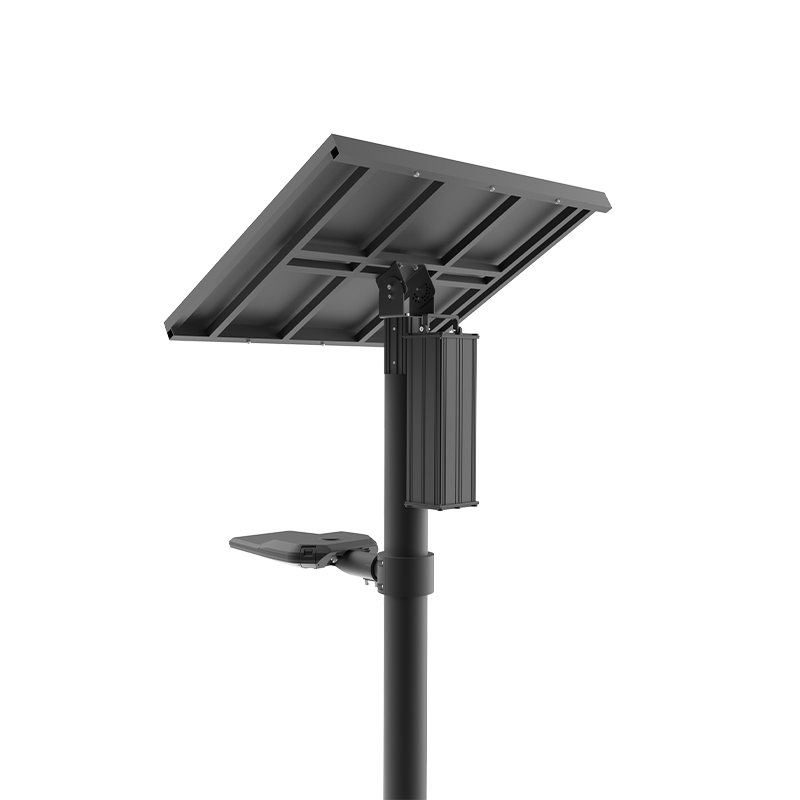
An all in one unit combines panel, battery, controller, and lamp in one head. A split system separates the panel and battery from the lamp. Integrated units tend to suit roads, paths, and parking areas where quick installation matters, while split systems suit cases that need larger battery banks or a panel angle independent of the pole.
| Factor | All in one | Split system |
|---|---|---|
| Field wiring | Minimal | Panel, battery, lamp cabling |
| Install time | Shorter | Longer |
| Panel tilt | Set by head design | Adjustable |
| Battery size | Limited by housing | Larger banks possible |
| Typical fit | Roads, paths, lots, villages | Long autonomy projects |
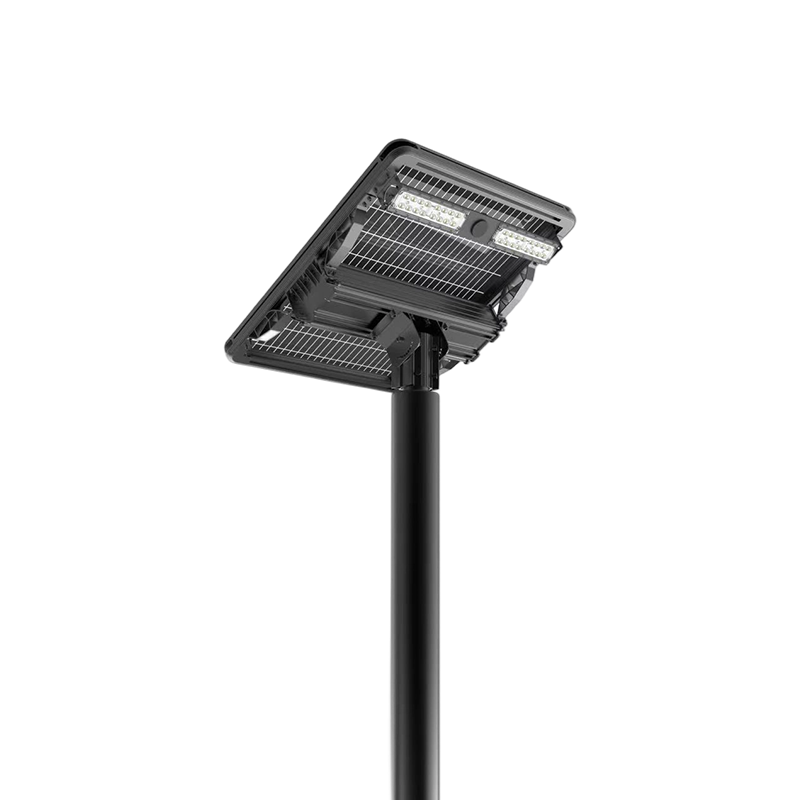
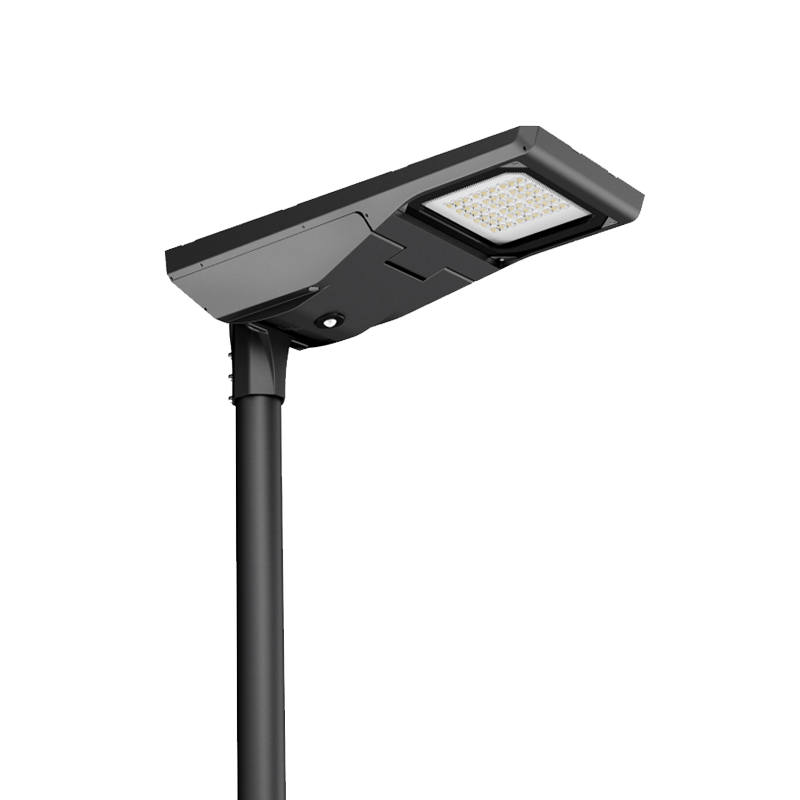
Integrated Solar Street Lights for Off-Grid Roads
Built for overseas regions lacking grid access, including rural roads, islands, scenic areas, and remote infrastructure.
Explore the RangeMatching Specs to Site Type: Where Each Requirement Changes
Solar street light for parking lot
Choose a wide distribution pattern and check glare toward entrances and neighboring buildings. Dimming after closing hours extends autonomy.
Solar street light for highway
Prioritize lumen output, narrow road optics, taller poles, and wind load on the head. Confirm the layout against the road lighting standard in your brief.
Solar street light for campus
Low glare, soft dimming, and motion response suit paths and courtyards. Pole height is often lower, so spacing is tighter.
Solar street light for construction site
Look for impact resistance, a simple base that can be relocated, and enough battery for early starts and late finishes.
Solar street light for remote villages
Long autonomy and low maintenance matter most. Tamper-resistant fasteners and a clear service guide help local teams.
Solar street light for mining site
Dust, vibration, and heat call for sealed housings and tested fasteners. Plan taller mounting along haul routes.
Solar bollard lights for commercial walkways
Low-level solar bollard lights mark pedestrian paths at plazas and campuses. Check the lens cut-off and the footprint of the panel.
Pre-Order Checklist and Questions to Send the Supplier
- Provide site latitude and the lowest-sun month so the supplier can size the panel.
- Ask for the usable battery capacity, not only the nameplate figure.
- Request the dimming profile and sensor settings in writing.
- Obtain an IES or LDT file and run a layout check.
- Confirm IP and IK ratings for the lamp head and battery area.
- Ask about the finish and fasteners for coastal or humid sites.
- Confirm the pole height, base plate, and wind load data.
- Check the operating temperature range for the battery and controller.
- Ask how the battery or controller is replaced in the field.
- Request a sample or a short pilot run before the full order.
Forland, founded in 2008 in Ninghai, Ningbo, Zhejiang, China, is a solar street lights manufacturer and All In One Solar Street Light factory with more than 18 years in the lighting industry. Production runs on die-casting machines, CNC machines, punching machines, and automatic spraying and assembly lines, covering work from raw material to finished product. The range is aimed at areas without grid access.
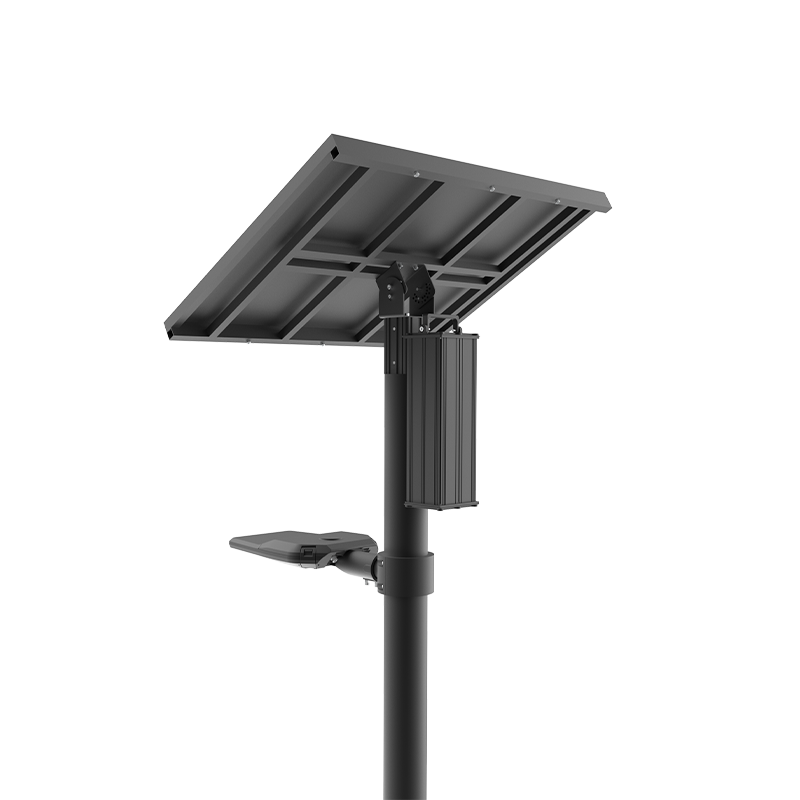
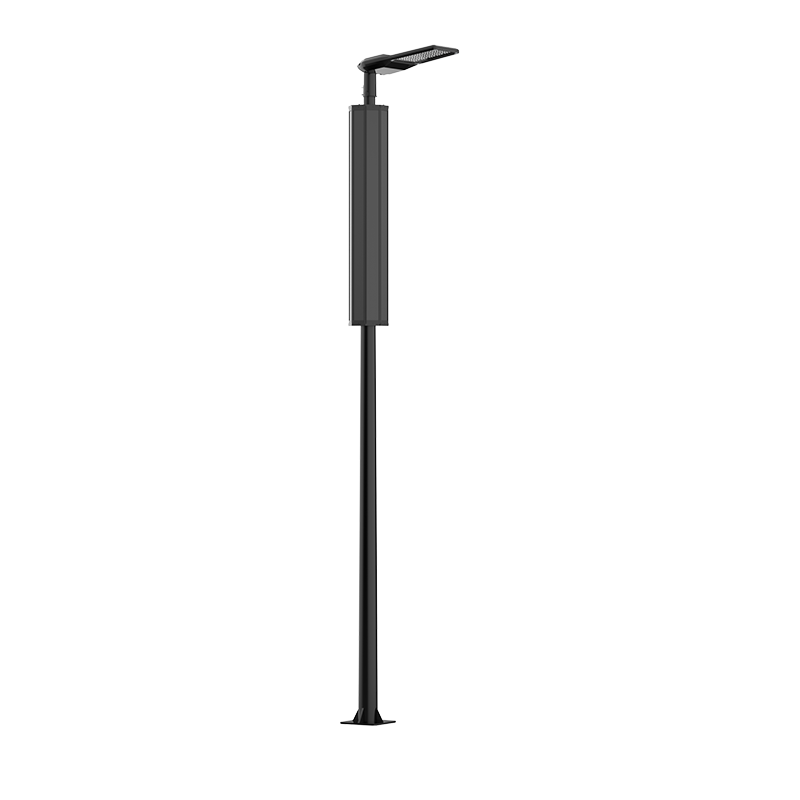
Solar Street Lights for Islands and Remote Infrastructure
Smart light and motion control helps maintain performance through overcast or rainy weather, and the die-cast aluminum body is made for outdoor conditions.
Request DetailsFrequently Asked Questions
Q1. Are solar street lights worth it?
They suit sites where trenching and grid connection are difficult or slow, and they remove cable work from the schedule.
Q2. How long do solar street lights last?
Service life depends on battery chemistry, cycle depth, climate, and build quality. LED and panel life usually exceeds battery life.
Q3. How do I choose the right solar street light?
Start with site sun data, required illuminance, and autonomy days, then match the twelve specs in this guide.
Q4. How far apart should solar street lights be placed?
A starting rule is three to four times mounting height, confirmed with a photometric layout.
Q5. How high should a solar street light pole be?
Heights range from about 4 m for walkways to 10 m or more for highways, depending on output and optics.
Q6. How to install a solar street light?
Set the foundation, stand the pole, mount the head, orient the panel toward the sun path, and run a night test.
Q7. Which battery type suits solar street lights?
LiFePO4 is common for its cycle life and thermal stability. Compare cycles at a stated depth of discharge.
Q8. Do solar street lights work on cloudy days?
They draw on stored energy, so autonomy days and dimming settings decide how many overcast nights they cover.