Español



A 6 m residential lane, 40 poles, a quote that reads 30% under the others, and by the first February half the lights are dim by midnight. That sequence is common enough to state the outcome up front: solar lights for street use rarely fail because the LED is weak. They fail because the energy budget was written on a bright design day and the battery was squeezed into the smallest housing that would fit on the pole.
So, conclusion first. Fix the lighting class, calculate the nightly energy demand, decide the days of autonomy, and only then pick panel wattage and battery capacity. The rest of this guide walks through those four decisions, the physical arrangements that support them, and the points where installed systems usually break down.
Content
- 1 Step 1: fix the lighting class before anyone mentions wattage
- 2 Step 2: turn the load into a nightly energy budget
- 3 Step 3: pick the arrangement — all-in-one, split or modular
- 4 Step 4: size the array against the site, not the datasheet
- 5 Two worked examples: a lane and a collector road
- 6 When the pole itself becomes the mounting surface
- 7 Procurement checklist before the purchase order
- 8 Frequently asked questions
- 8.1 How many hours do solar lights for street use stay on at night?
- 8.2 Do solar street lights still work in winter and on cloudy days?
- 8.3 What is the difference between all-in-one, split and modular solar street lights?
- 8.4 How long does a solar street light battery last?
- 8.5 What IP rating do solar street lights need?
- 8.6 Can solar street lights meet EN 13201 or local road lighting standards?
Step 1: fix the lighting class before anyone mentions wattage
Wattage is a number without meaning until it is tied to a road. The targets that matter are average maintained illuminance and uniformity across the carriageway, which is what EN 13201-2 sets out as the M classes. A residential access road normally lands near M4–M5, a collector road with mixed traffic near M3, and a main road near M2. A supplier who quotes 100 W without a class has given you nothing you can verify after installation.
EN 13201-2 road lighting classes — average maintained illuminance target
Values as tabulated in EN 13201-2. Maintained figures apply after lumen depreciation and dirt.
Two details are worth pinning down in the specification. First, these are maintained values, so design to them rather than to first-night output on a test bench. Second, uniformity matters as much as the average level: a 10:1 maximum-to-minimum ratio on a narrow lane reads as alternating bright pools and dark gaps, and complaints follow the gaps, not the average.
Luminaires in this class typically deliver 130–150 lm/W at the LED, so an 8 m collector road at roughly 8,000 lm lands near 60 W, while a 6 m lane at 3,000 lm lands near 30 W. Those two figures drive everything that follows.
Step 2: turn the load into a nightly energy budget
Take that 30 W luminaire on an 11-hour night with a three-step profile: full output for four hours, 60% for four hours, 30% for the last three. The night costs 120 + 72 + 27, about 219 Wh — not the 330 Wh you get by multiplying 30 W by 11 hours. That single dimming step removes a third of the panel and battery cost, which is why the profile belongs in the datasheet and not in a verbal agreement.
PV wattage ≈ nightly Wh ÷ (design-month peak sun hours × 0.75)
The 0.75 factor covers controller losses, cell temperature and light soiling on a clean, well-oriented array. Battery capacity uses the same nightly figure: usable Wh equals nightly Wh multiplied by days of autonomy, then divided by the depth of discharge you are willing to cycle. LiFePO4 is commonly worked at 60–80% DoD; lead-acid should stay near 50% if you want a service life measured in years rather than seasons.
Step 3: pick the arrangement — all-in-one, split or modular
Three physical layouts dominate the market, and each pushes a different risk onto the installer.
- All-in-one: panel, battery and LED in one housing at the pole top. Quick to install and cheapest per unit, but the battery sits in the hottest part of the assembly, is often sealed in, and the panel cannot be tilted independently of the head.
- Split: luminaire on the arm, PV panel on a bracket, battery in a compartment on the pole or at its base. Better thermal behaviour and field-replaceable parts, at the cost of more cable, glands and connectors.
- Modular: PV module, control and battery unit, and luminaire specified and replaced separately. The most flexible for tenders and the easiest to keep alive over a ten-year asset life.
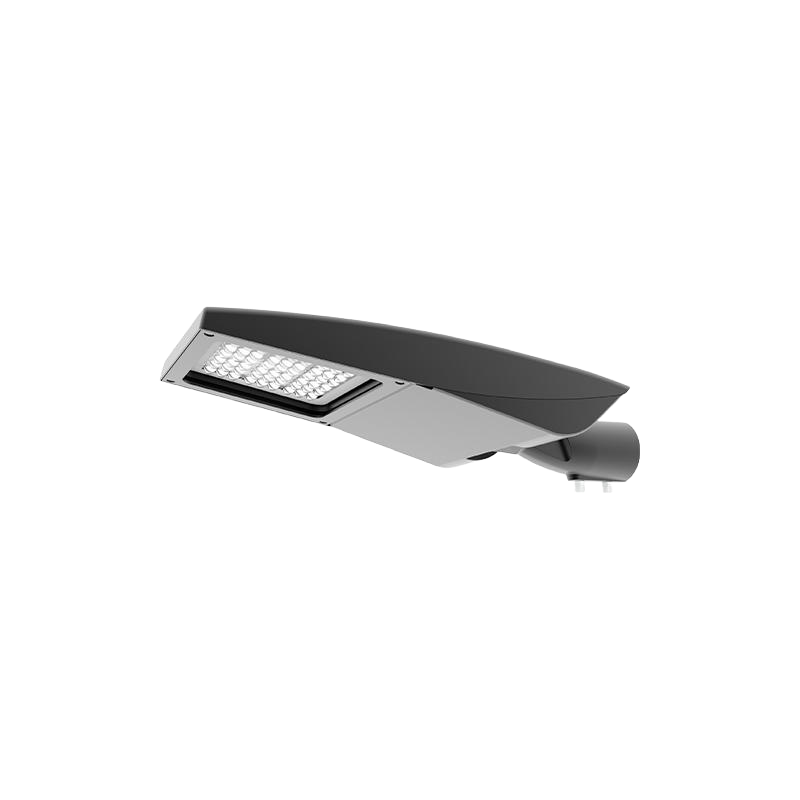
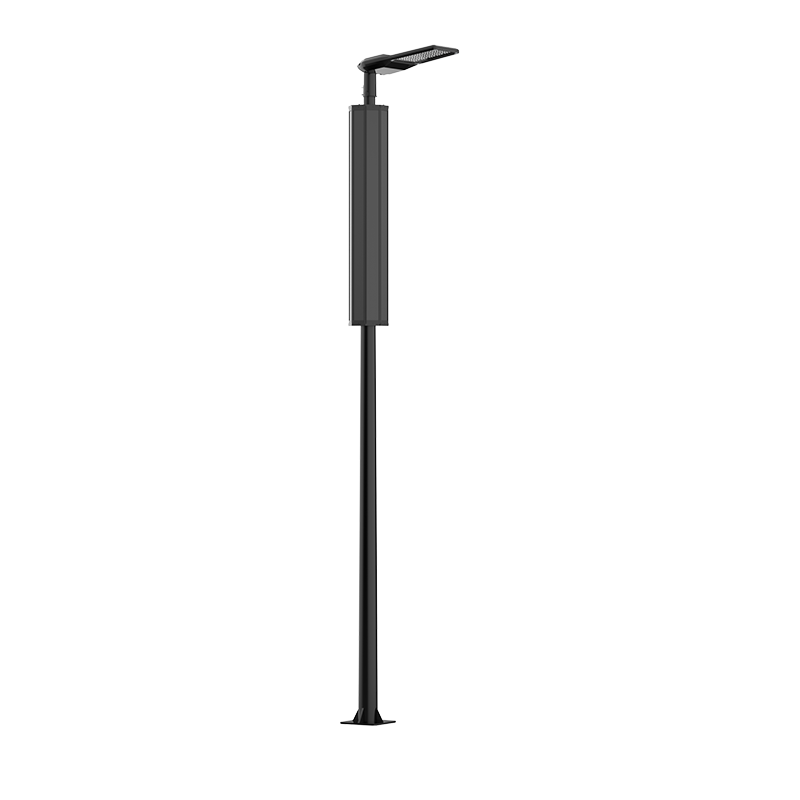
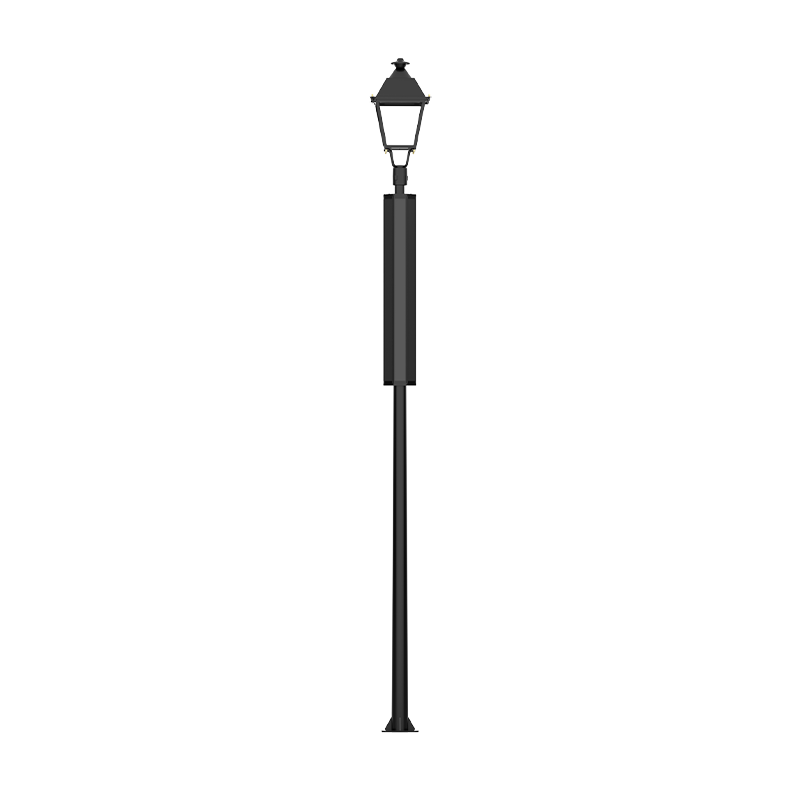
Split-arrangement anatomy: the vertical PV module folds around the pole, the luminaire keeps its own arm, and the battery sits in a compartment a maintenance crew can open without a lift.
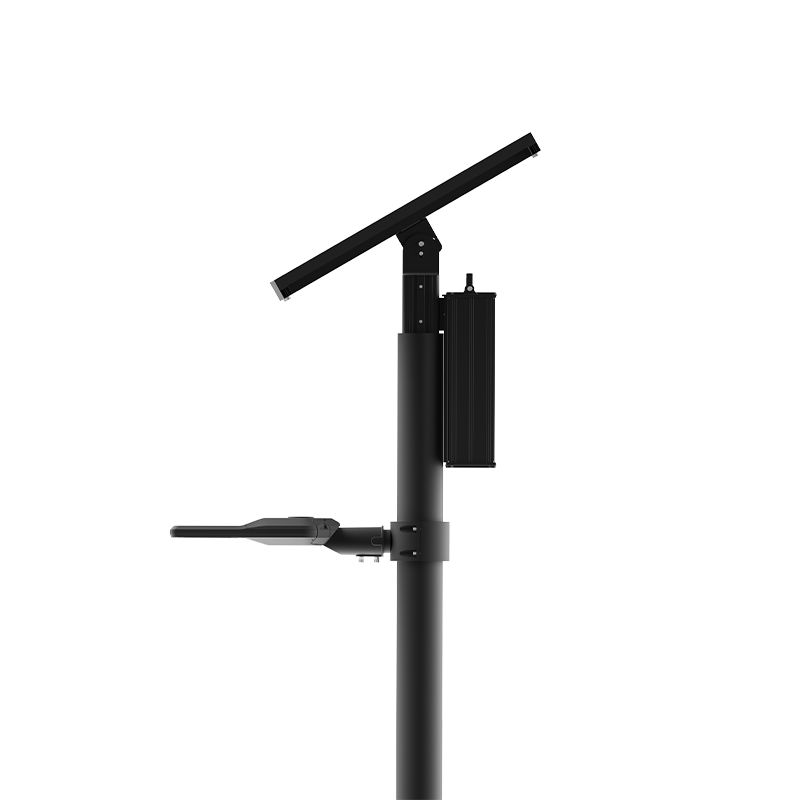 Split-Type Solar Street Light with Slide-Out Battery CompartmentModular street light separates PV, luminaire and LiFePO4 storage; slide-out battery access enables lift-free maintenance, and adjustable PV tilt suits regional solar conditions.View Product →
As a rule of thumb, anything above a 5 m mounting height is better served by a split or modular layout. Above 6 m the battery mass and heat load stop being trivial, and a serviceable compartment saves far more across ten years than it costs at the quotation stage.
Step 4: size the array against the site, not the datasheet
Panel ratings are quoted at standard test conditions — 1,000 W/m² and 25 °C — which almost no street ever sees. The design month should be the worst month, not the annual average: northern Europe drops to roughly three peak sun hours in December, while the Gulf and North Africa hold five hours or more all year. Building shade, maturing trees and dust compound the gap.
Temperature works the other way on the battery. A pole-mounted box in direct summer sun can sit 15–20 °C above ambient, and every 10 °C of extra heat roughly halves the calendar life of a lithium pack. Shaded mounting or a ventilated compartment is not a cosmetic choice.
Two worked examples: a lane and a collector road
The arithmetic gets easier with numbers attached. Both examples use the same 11-hour, three-step dimming profile, four peak sun hours in the design month, two nights of autonomy and 60% usable depth of discharge.
Nightly energy demand and the array it implies
Worked example only; substitute your own site irradiance and dimming profile.
| Parameter | 6 m residential lane (M5) | 8 m collector road (M3) |
|---|---|---|
| Luminaire output | ≈3,000 lm | ≈8,000 lm |
| Luminaire power | 30 W | 60 W |
| Nightly profile | 11 h, 3-step dimming | 11 h, 3-step dimming |
| Nightly energy | ≈219 Wh | ≈438 Wh |
| PV array (design month) | ≈80 Wp | ≈150 Wp |
| Battery at 25.6 V | ≈30 Ah | ≈60 Ah |
| Autonomy | 2 nights | 2 nights |
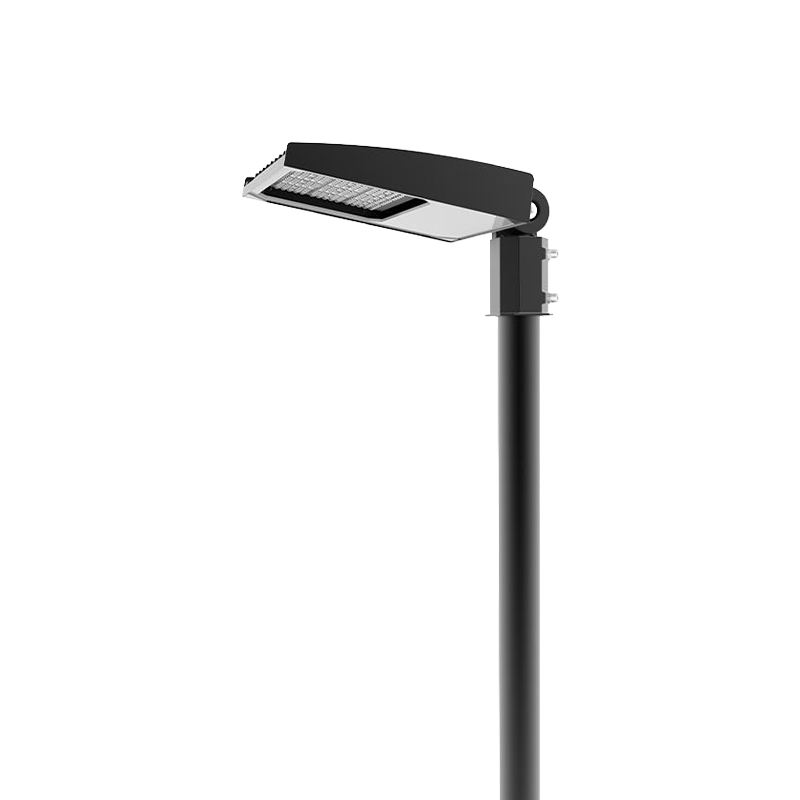
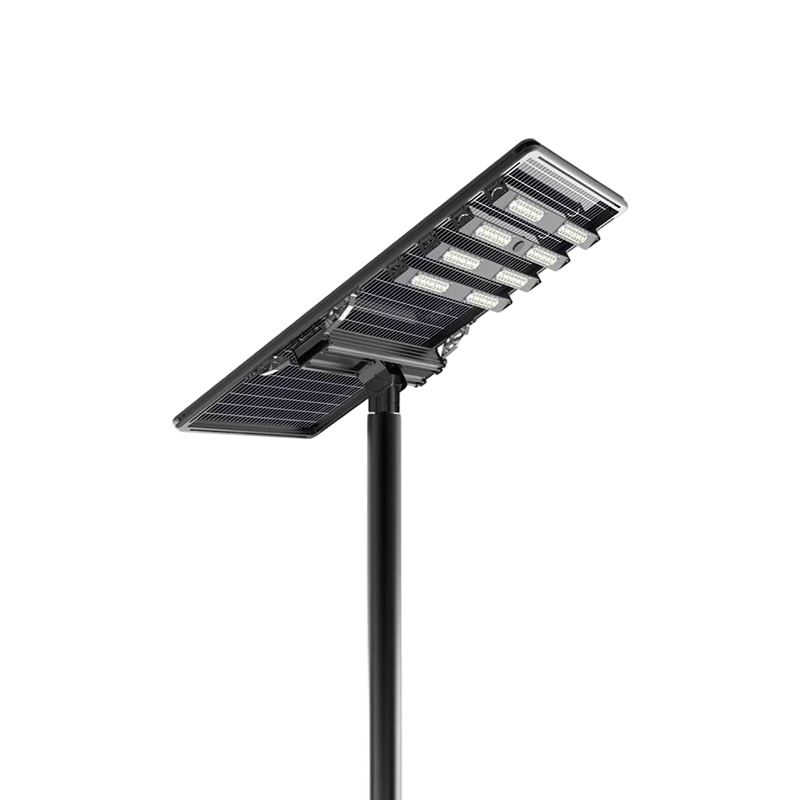 Configurable Modular Solar Street Light for Engineering ProjectsModular PV, battery and lighting sections can be sized separately for overseas road projects, supporting scalable configurations, varied optics and sensor-based dimming.View Product →
Note how the collector road needs roughly twice the array for twice the light: the battery, not the LED, sets the cost curve. Once the numbers are on paper, the modular configuration is usually the cheaper route at scale, because a 150 Wp array and a 25.6 V / 60 Ah pack can be specified, tested and replaced as separate line items.
When the pole itself becomes the mounting surface
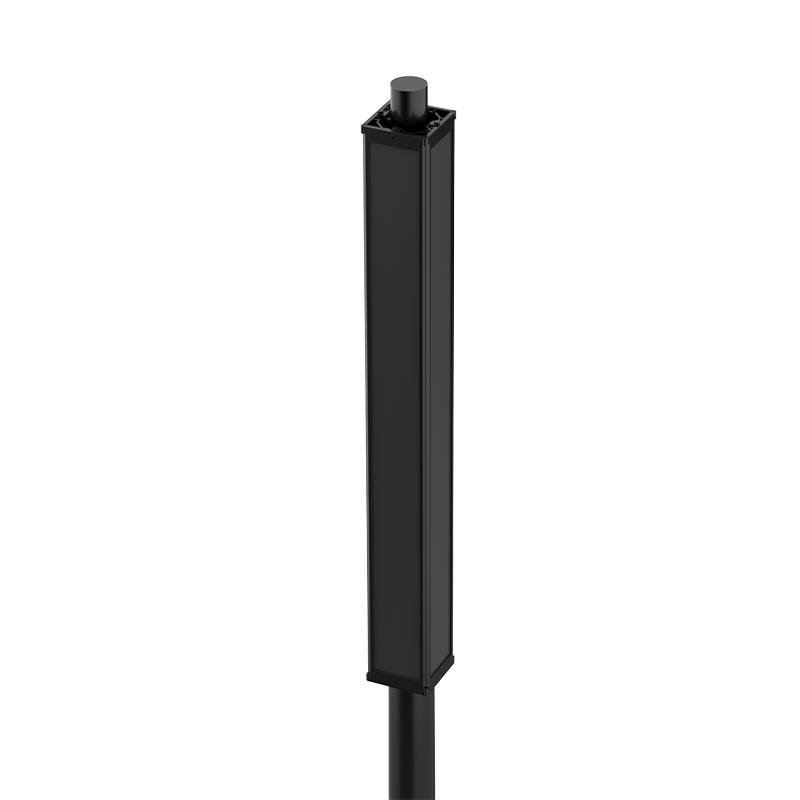
On narrow pavements, heritage streets and bridges, a horizontal panel on a bracket overhangs the walkway and catches wind. Vertical PV modules avoid that: the module mounts flat against the pole, folds around it for transport, and leaves carriageway clearance untouched.
The trade-off is real. A vertical plane collects less annual irradiation than a tilted one at low latitudes, because the sun stays high for most of the year. At higher latitudes the gap narrows and winter performance can improve — snow slides off, and the low winter sun strikes the vertical plane closer to normal incidence. Soiling also drops, since dust does not settle on a vertical surface the way it does on a horizontal one, and wind load on the pole falls with the frontal area.
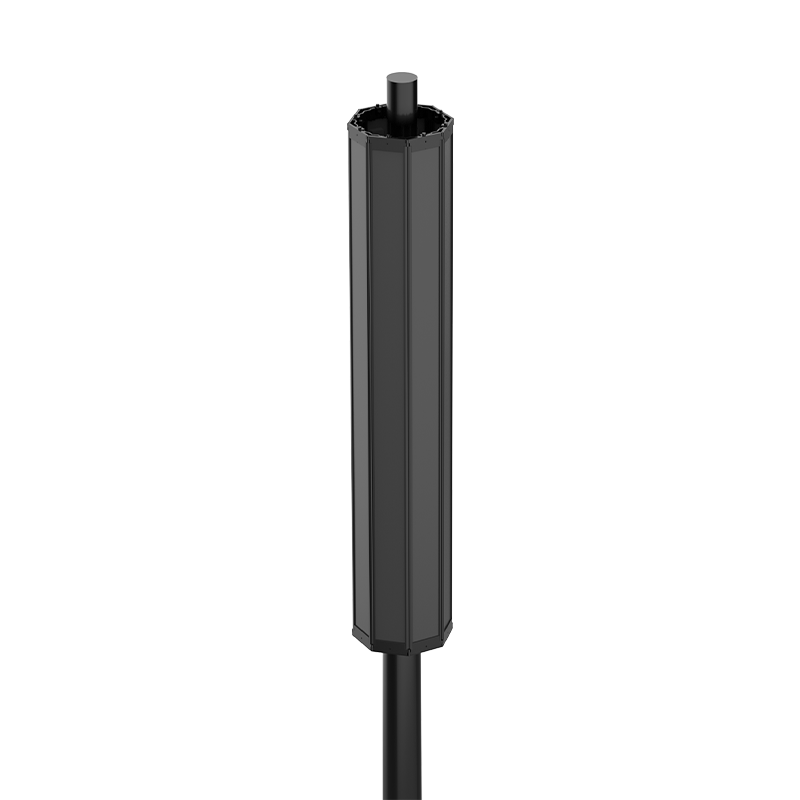
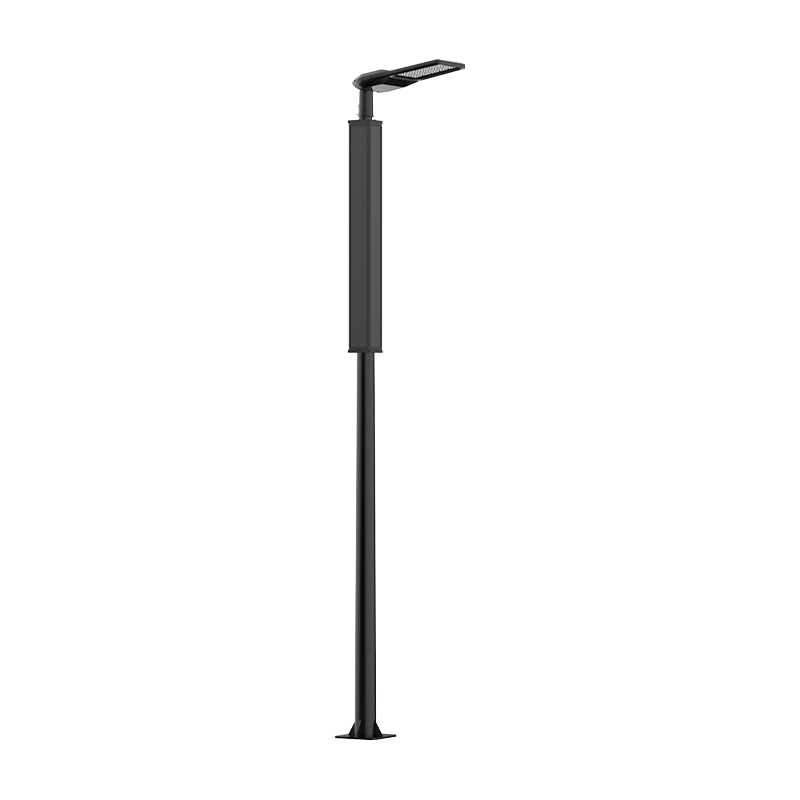 Foldable Quadrilateral Pole-Mounted 76 W Solar Module76 W four-sided vertical PV module folds for transport and expands around poles, collecting light from multiple directions while reducing dust accumulation and wind load.View Product →
For a 6–8 m pole, a folded quadrilateral module rated 76 W covers the nightly demand of a 30 W class luminaire with dimming; the 120 W vertical power module suits taller poles and heavier loads.
Procurement checklist before the purchase order
- Lighting class and uniformity target stated per road type, with the calculation method named.
- Luminaire efficacy in lm/W and the dimming profile written into the datasheet.
- Design-month peak sun hours and the derating factor agreed in writing.
- Battery chemistry, usable capacity, DoD limit and expected cycle count.
- IP rating on the luminaire, the battery compartment and every connector, with gland orientation checked.
- Certification set for the destination market — CE and GS/TÜV for Europe, SAA for Australia — plus a current ISO 9001 certificate from the factory.
- Spare battery and controller availability five years after delivery.
Our contractor buying guide breaks twelve of these specifications down line by line. If a project already has a road class, a site latitude and a budget, send those three figures to our engineering team and ask for a sizing sheet before the tender closes.
Frequently asked questions
How many hours do solar lights for street use stay on at night?
Ten to twelve hours in most specifications, matching dusk-to-dawn operation. The real answer depends on the dimming profile behind that number: a 30 W luminaire at full power for 11 hours needs about 330 Wh, while the same unit on a three-step profile needs roughly 219 Wh.
Do solar street lights still work in winter and on cloudy days?
Yes, but with less margin. A heavily overcast day may deliver only 10–25% of clear-sky irradiance, so the array has to be sized on the worst month and the battery on two or three consecutive dull days. Systems that skip that step are the ones that go dark in December.
What is the difference between all-in-one, split and modular solar street lights?
All-in-one packs panel, battery and light into one pole-top housing — fast to install, harder to service. Split separates the panel and battery from the luminaire. Modular keeps every part independent so it can be specified and replaced on its own.
How long does a solar street light battery last?
A LiFePO4 pack cycled within 60–80% depth of discharge typically delivers several thousand cycles, which is six to ten years of nightly operation — provided it stays cool. Lead-acid in the same application often needs replacement after two to four years.
What IP rating do solar street lights need?
IP65 minimum for the luminaire, and IP65 or better for the battery and controller compartment; IK08 impact resistance is worth adding on roadside poles. In practice most water ingress happens at cable glands rather than through the housing wall.
Can solar street lights meet EN 13201 or local road lighting standards?
Yes. The standard sets illuminance and uniformity targets, not an energy source. Ask for a lighting simulation on your actual road geometry and check the maintained values, not the initial ones measured the night the lights went up.