Español



A city engineer with 260 poles to light and a capital budget that will not stretch to the premium catalogue usually starts with a spreadsheet of unit prices. That is the wrong starting point. The unit that looks 20% cheaper at tender often becomes the more expensive one by year five, because the saving was taken out of the battery and the panel — the two components that decide whether the light is still burning at 06:00 in February.
The practical definition of affordable solar street lighting for cities is simple: the lowest cost per lit hour across the whole service life, with a maintenance load the city's electrical department can actually carry. Every section below follows from that definition — where the money sits inside the fixture, which configuration suits which road, how to size the array without over-buying, and what to write into the tender so the price you sign is the price you live with.
Forland has been manufacturing LED and solar lighting in Ningbo since 2008, with die-casting, CNC machining, coating and assembly under one roof. That factory-side view is useful here, because most of the cost levers below are decided long before the pole is delivered.
Content
- 1 Affordability Is a Service-Life Number, Not a Unit Price
- 2 Where the Money Actually Sits Inside the Fixture
- 3 Three Configurations, Three Different Cost Profiles
- 4 Design to the Road Class You Actually Have
- 5 The Battery Decision Shows Up in Year Five
- 6 Pole-Side Design: The Saving Nobody Puts in the Spreadsheet
- 7 What to Write Into the Tender
- 8 Frequently Asked Questions
- 8.1 Q1. How much does affordable solar street lighting for cities cost per pole?
- 8.2 Q2. How many lumens does a solar street light need for a city road?
- 8.3 Q3. How many days of autonomy should a solar street light have?
- 8.4 Q4. Do solar street lights work in winter or low-sunlight regions?
- 8.5 Q5. What IP rating and certifications should solar street lights carry?
- 8.6 Q6. How long do solar street light batteries last before replacement?
Affordability Is a Service-Life Number, Not a Unit Price
Split the budget into five lines — hardware, installation, energy, replacement and end-of-life — and the picture changes. Solar removes the energy line almost entirely, but it shifts risk into replacement, because the battery bank is the one component certain to need attention before the pole does.
In tender documents we review from different regions, the same three mistakes keep appearing: arrays sized on annual average irradiance instead of the worst month, all-in-one heads whose cells sit at 55 °C in summer, and lighting designs run at double the illuminance the road class actually requires.
| Cost line | Where budget usually leaks | Specification lever |
|---|---|---|
| Hardware | PV array trimmed to hit a price point | Size for the worst month, not the annual average |
| Installation | Heavy heads needing cranes or two-person lifts | Keep head mass and mounting interface simple |
| Energy and control | No dimming profile, no fault visibility | Adaptive dimming plus remote monitoring |
| Battery replacement | Cheap chemistry cycled hard in a hot head | Lithium iron phosphate, depth of discharge ≤ 70%, thermal separation |
| Maintenance | Battery sealed at 8 m, no spare-part path | Split design with ground-level battery access |
None of these are manufacturing defects. They are specification choices — cheap to change at the drawing stage, expensive to reverse once 260 poles are standing.
Where the Money Actually Sits Inside the Fixture
Energy storage and PV generation together take roughly half of the bill of materials in a mid-power municipal solar street light. The die-cast housing, the part buyers negotiate hardest, is a small slice of the total.
The implication is uncomfortable but useful: value engineering should attack the energy budget, not the metal. A luminaire running at 155 lm/W instead of 120 lm/W cuts the panel and battery requirement by more than 20% for the same road brightness. That is where an affordable system is actually manufactured — not in a thinner wall section.
- Efficacy beats price per lumen on any road with more than four burning hours a night.
- Optics control cost twice: efficient distribution allows wider spacing, which removes poles from the bill.
- Housing matters mainly for corrosion resistance, thermal path and service access — not for weight saving.
Three Configurations, Three Different Cost Profiles
There is no single "affordable" architecture. The right one depends on where the battery can live, how much wind load the pole can take, and whether your maintenance team owns a bucket truck.
All-in-one heads
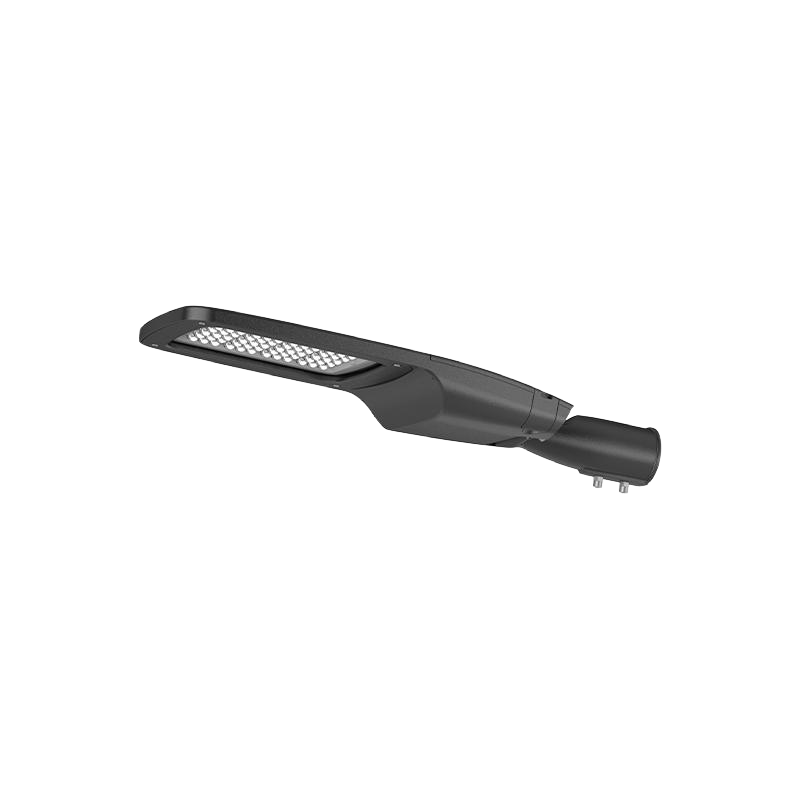
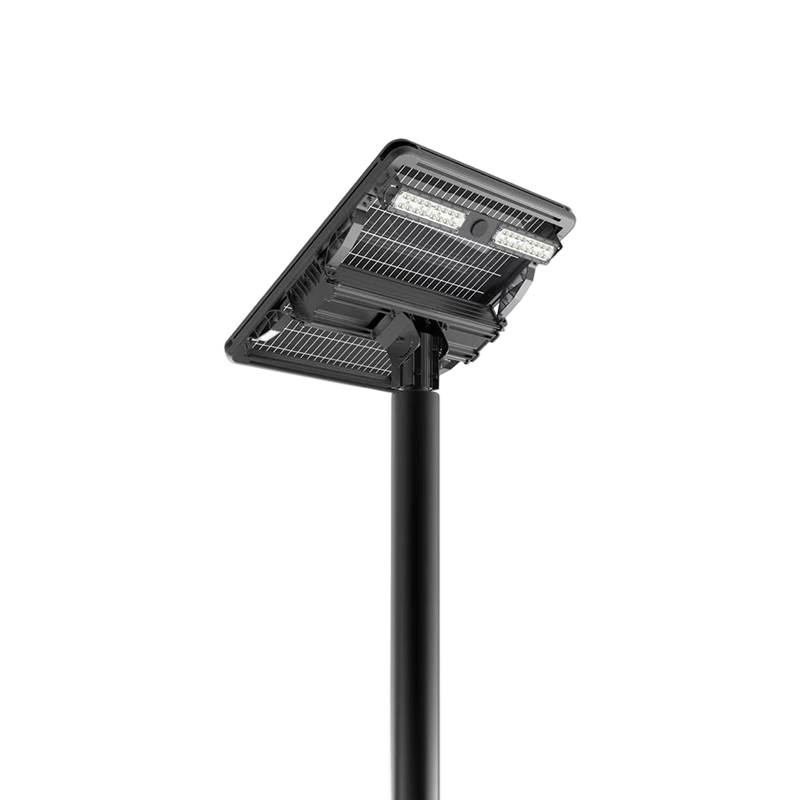
Lowest installation labour, one lift per pole, no cabling between components. The trade-off is thermal: the cells share a compartment with the LED driver and bake in summer. In hot climates, expect noticeably faster capacity fade unless the head is genuinely ventilated.
Split-type systems
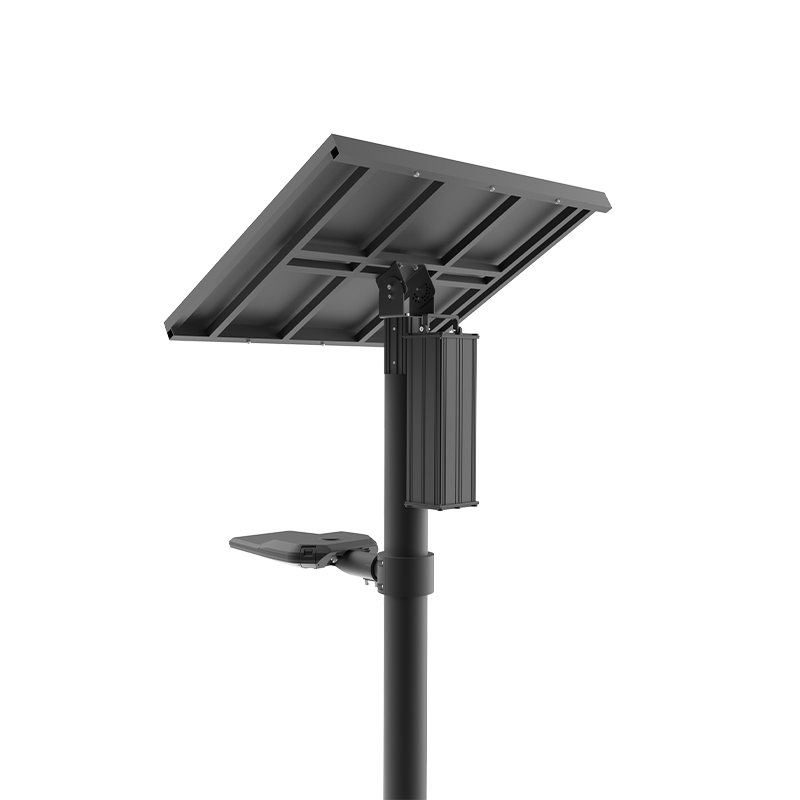
The panel sits on top, the battery moves into a pole-base compartment or a separate enclosure at ground level. More cabling and more installation time, but the battery stays near ambient temperature and is serviceable by one technician without a lift. Over eight to ten years this is usually the cheaper architecture.
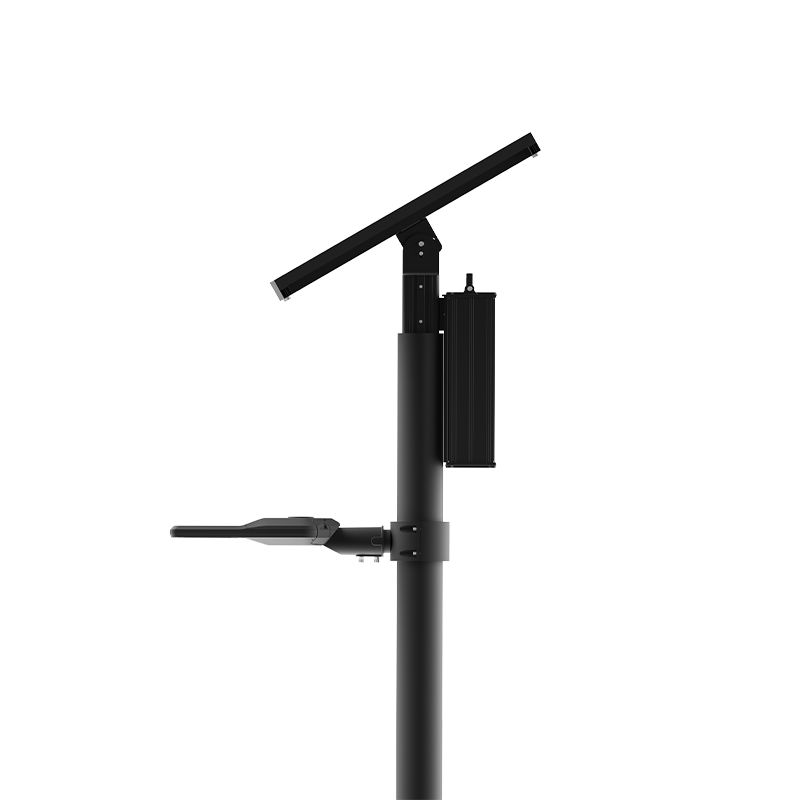 Split-Type Modular Solar Street Light with Slide-Out BatterySeparates panel, luminaire and storage, with a slide-out battery compartment and adjustable tilt for easier long-term maintenance in municipal projects.View Product →
Modular and pole-mounted configurations
Panel, luminaire and storage arrive as separate modules, so a failed controller is a ten-minute swap rather than a whole-head replacement. Modular units also allow a city to standardise one head across several pole types and vary only the energy module. Configurable modular ranges are worth reviewing if you procure in phases.
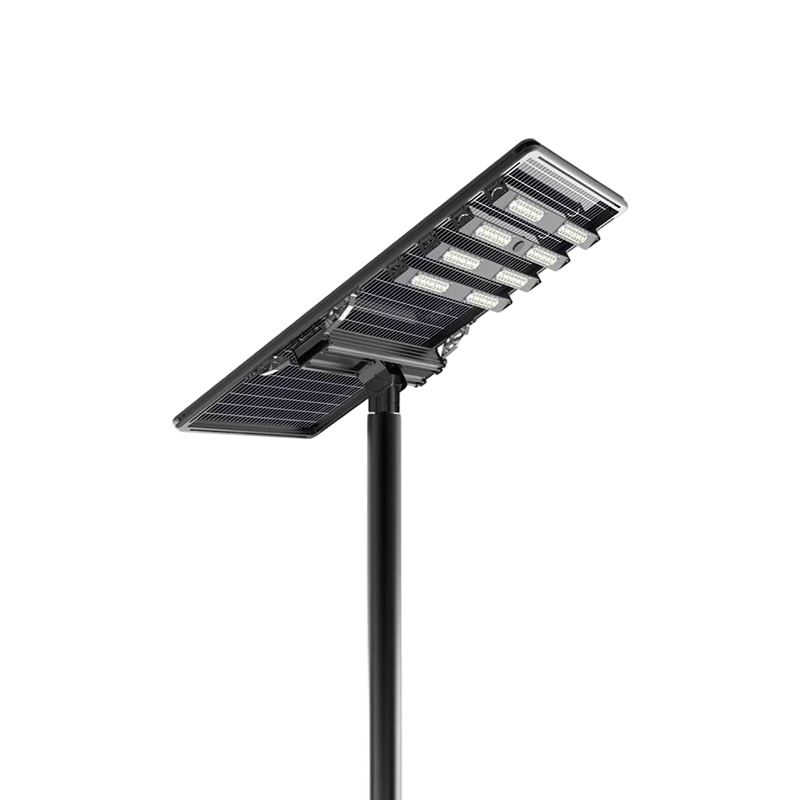 Configurable Modular Solar Street Light for Engineering ProjectsCombines scalable PV, battery and lighting modules to match road classes and solar conditions, supporting phased procurement and standards-aligned projects.View Product →
Design to the Road Class You Actually Have
Over-lighting is the single largest avoidable cost in municipal solar projects. The European standard EN 13201-2 and the North American IES RP-8 series both work from lighting classes tied to road hierarchy, traffic volume and conflict density. A residential collector road is not a trunk road, and it should not be lit like one.
Take a concrete case: the EN 13201 M4 class calls for roughly 0.75 cd/m² average road-surface luminance with a uniformity of 0.4. Designing the same street to M2 doubles that luminance figure, and roughly doubles the panel and battery you must buy — for a benefit most road users will never notice. Always confirm the current edition of the standard and your local authority's own class map before fixing a lumen figure.
- Fix the lighting class first, then the luminaire, then the array — in that order.
- Check uniformity and pole spacing together; a bright lamp on wide spacing can still fail the class.
- Apply a realistic maintenance factor for lumen depreciation instead of designing to day-one output.
- Use a time-based dimming profile (for example 100% until 23:00, then 50–60%) — it can cut nightly energy demand by a third on low-traffic roads.
The Battery Decision Shows Up in Year Five
Almost every budget surprise in solar street lighting is a storage surprise. Cell makers typically rate lithium iron phosphate (LFP) at 3,000–6,000 full cycles to 80% of original capacity, while leaner nickel-based chemistries commonly land in the 1,500–2,500 range. At one cycle per day, that difference is the gap between replacing batteries at year eight and replacing them at year four.
Chemistry is only half of it. Depth of discharge, charge-cutoff strategy and cell temperature decide the rest. A widely used rule of thumb among cell manufacturers is that every 10 °C above 25 °C roughly halves calendar life — which is exactly why moving the pack out of the head and into the pole base matters more than the marketing on the box.
Pole-Side Design: The Saving Nobody Puts in the Spreadsheet
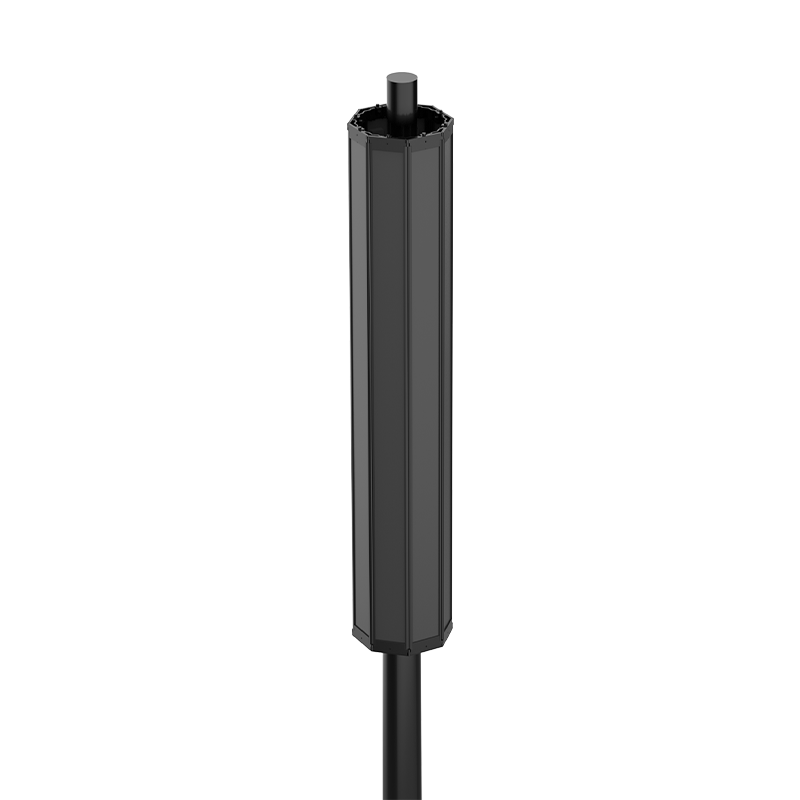
On retrofit projects the pole already exists, and the cheapest watt is the one you do not have to mount separately. Vertical, foldable PV modules clamp directly onto the pole or mast, so there is no ground array, no land take, no foundation and no trenching. The vertical plane also presents a small wind profile and sheds dust and bird soiling more evenly than a low-tilt horizontal panel, although it yields less per rated watt than an optimally tilted array — a trade worth making when civil works dominate the budget.
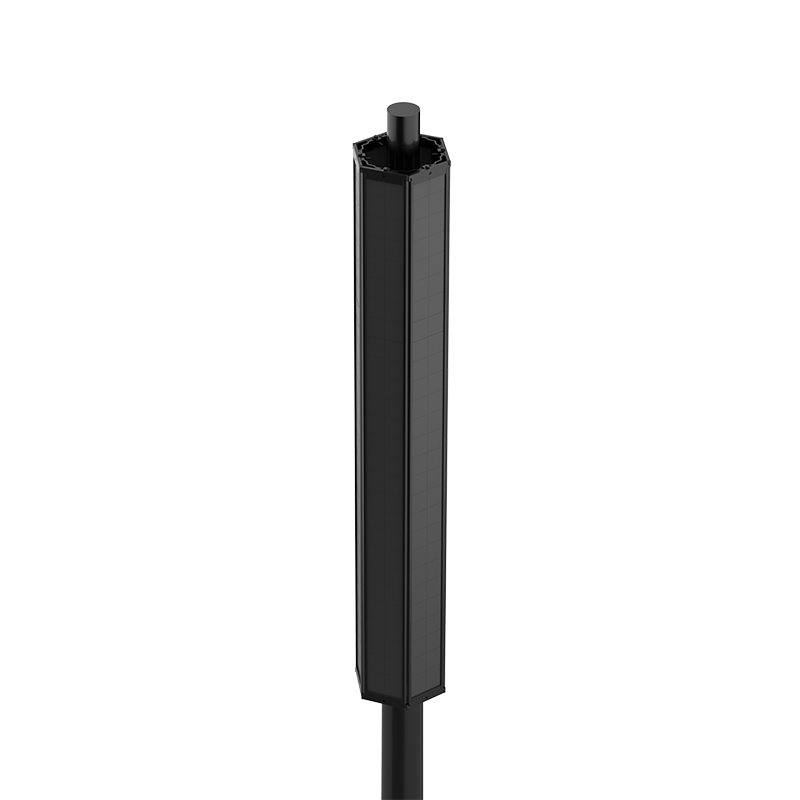 Foldable Pole-Mounted Solar Panel for Street LightingWraps around poles up to 170 mm, folds for transport and supports retrofit lighting without ground arrays, foundations or trenching.View Product →
Where the pole is new rather than existing, ask for the vertical module's wind-load calculation together with the pole's design load. Clamp load on a slim decorative column is a different problem from clamp load on a heavy mast, and the answer belongs in the structural drawings, not in a brochure.
What to Write Into the Tender
Most affordability problems are locked in by clauses that were never written. These eight items cover the gaps we see most often:
- Lighting class and the dimming schedule, stated as a required profile rather than a suggestion.
- Autonomy defined on the worst month, typically three to five consecutive low-sun days.
- Battery chemistry, usable capacity, maximum depth of discharge and a capacity warranty at year five.
- Luminaire efficacy in lm/W and the photometric file used to prove the class is met.
- Ingress protection to IP66 and impact resistance to IK08, referenced to IEC 60529 and IEC 62262.
- LM-79 and LM-80 test data, plus the maintenance factor used in the lighting calculation.
- Certification of the controller and the pack to the relevant IEC standards, alongside factory quality documentation such as ISO 9001 and third-party marks like TÜV, CE, GS or SAA.
- A sample unit for bench testing, and a spares list that names the controller and battery part numbers.
Our contractor guide to the twelve specifications that matter walks through each of these with the test methods behind them.
Frequently Asked Questions
Q1. How much does affordable solar street lighting for cities cost per pole?
It scales with lumen output, pole height, autonomy days and battery chemistry rather than with the brand. Compare offers on cost per lit hour, including one battery replacement, instead of on unit price alone.
Q2. How many lumens does a solar street light need for a city road?
Work backwards from the lighting class. Residential streets usually sit well below trunk-road levels, and 8,000–20,000 lm covers most collector applications with 6–10 m mounting heights and 25–35 m spacing.
Q3. How many days of autonomy should a solar street light have?
Three to five consecutive low-sun days is the usual municipal specification. Going beyond five days adds battery cost faster than it adds reliability, so pair long autonomy with a dimming profile instead.
Q4. Do solar street lights work in winter or low-sunlight regions?
Yes, if the array is sized on December rather than on the annual average and the battery is kept above freezing during charging. Vertical pole-mounted modules also pick up more low-angle winter sun than flat panels.
Q5. What IP rating and certifications should solar street lights carry?
IP66 for the luminaire and IP65 or better for the battery enclosure, with IK08 impact resistance. Ask for ISO 9001 factory evidence plus CE, TÜV, GS or SAA marks depending on your market.
Q6. How long do solar street light batteries last before replacement?
Lithium iron phosphate packs typically reach 80% capacity after eight to ten years at one cycle per day and moderate temperature; nickel-based packs in hot all-in-one heads often need replacement around year four to five.
Affordable solar street lighting for cities comes down to four decisions: design to the class the road actually needs, keep the battery cool and accessible, buy panel capacity based on the worst month, and write the specification so nobody can shave the difference later. Everything else — the finish, the housing shape, the brochure claims — is detail.
If you are preparing a municipal tender or a phased retrofit and want the numbers checked against real assemblies, our engineering team can review your lighting class, pole spacing and autonomy assumptions before the specification is fixed. Send us the road layout and we will come back with a sizing sheet rather than a single price tag.