Español



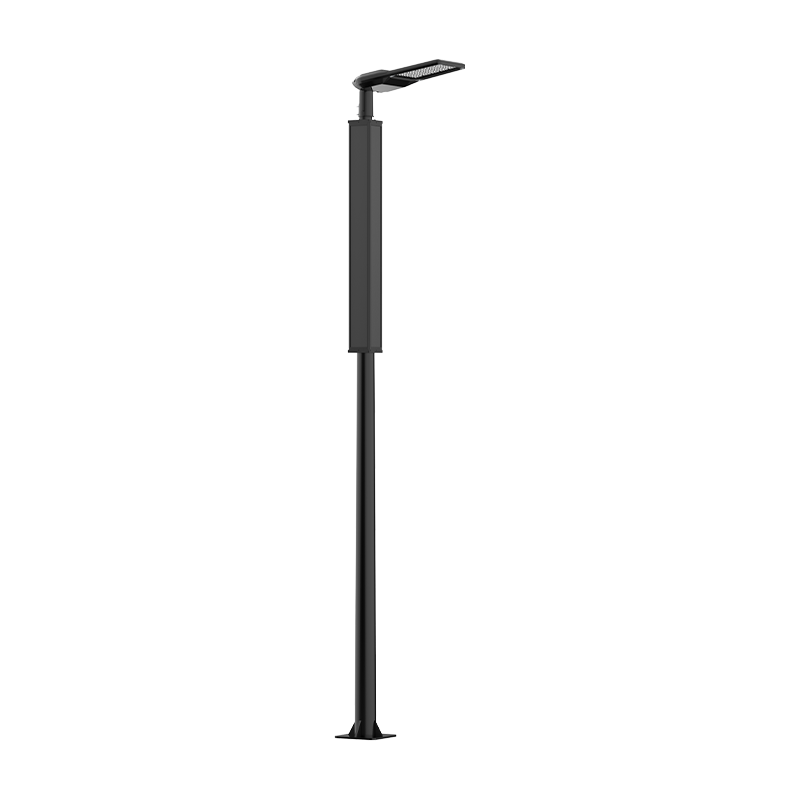
Picture a 9 m municipal pole on a coastal road. A 60 W LED luminaire sits at the top, two CCTV cameras hang from a cross arm, an air-quality sensor and a 5G small cell are bolted to the shaft, and a battery cabinet stands at the base. Every component passed its factory test. Eighteen months later the pole leans into the wind, the battery has dried out, and the cameras reboot at every dusk.
Almost no smart pole project fails because of the electronics. It fails on three numbers: the wind load acting on everything above 6 m, the watt-hours still left in the battery at 3 a.m. in December, and the air temperature inside a sealed cabinet in July. Settle those three and the rest is detail — device selection, protocol, finish colour.
This guide is written for importers, distributors and project buyers who have to approve a drawing rather than write firmware. It covers what a smart pole actually contains, how to size power and structure, where vertical solar earns its place, and which specifications to lock down before a purchase order is signed.
Content
- 1 What a Smart Pole Is Made Of
- 2 Structural Load: The Number That Gets Ignored
- 3 Vertical Solar on the Pole: Where It Helps and Where It Doesn't
- 4 Working the Energy Balance Before You Choose a Module
- 5 Controls and Communications: What to Fix in the Specification
- 6 Procurement Checklist for Importers and Project Buyers
- 7 Smart Pole FAQs
- 7.1 What is a smart pole used for?
- 7.2 How much power does a smart pole need?
- 7.3 Can a smart pole run only on solar power?
- 7.4 What wind speed should a smart pole be rated for?
- 7.5 What is the difference between a smart pole and a normal street light pole?
- 7.6 Do foldable vertical solar modules fit an existing light pole?
What a Smart Pole Is Made Of
A smart pole is a structural mast carrying four layers: power, connectivity, devices and management. The mast is usually the cheapest line on the quotation and the hardest item to change later — wall thickness, base plate and spigot size decide what the pole can carry for the next twenty years.
The ranges below are what we see most often at quotation stage. Treat them as a starting point for the load case, not as a substitute for the real device datasheets.
| Layer | Typical continuous draw | Typical weight | Mounting interface |
|---|---|---|---|
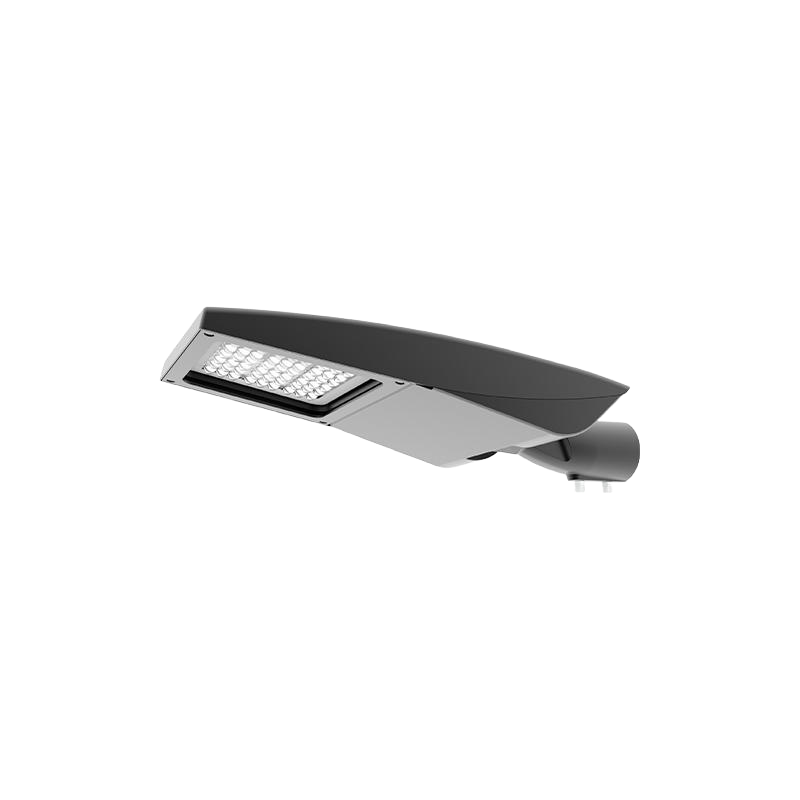
| LED luminaire, 40–100 W, dimmed | 40–100 W, night only | 6–14 kg | 60 / 76 mm spigot, NEMA or Zhaga socket |
| CCTV camera with IR | 8–15 W, 24 h | 2–5 kg | Cross arm, 1 in thread |
| 5G small cell or radio unit | 30–80 W, 24 h | 8–20 kg | Pole-top shroud or side bracket |
| Environmental sensor node | 2–5 W, 24 h | 1–3 kg | Side bracket |
| Controller, gateway, switch | 5–12 W, 24 h | 2–4 kg | DIN rail inside cabinet |
| Battery and power cabinet | 5–10% charging loss | 25–60 kg | Base or mid-pole enclosure |
Interfaces matter as much as payload. A Zhaga Book 18 or NEMA 7-pin socket lets a luminaire-mounted controller be swapped in the field; a 60 mm or 76 mm spigot decides whether another supplier's luminaire will ever fit. If the drawing locks in a proprietary bracket, the buyer stays with one vendor for the life of the installation — a real cost across a 200-pole roll-out.
Structural Load: The Number That Gets Ignored
Wind load on a pole is roughly the local wind pressure multiplied by a drag coefficient and by the sail area of everything bolted to the mast. That last term is where projects go wrong. A luminaire adds very little; a 1.2 m camera cross arm with two housings, a small-cell shroud and a pair of solar modules can add close to a square metre of sail area at 8 m, exactly where the bending moment is greatest.
European buyers normally specify lighting columns to EN 40-3, which verifies the column against a defined wind pressure and drag factor. The test only covers the configuration that was tested. Once devices are added, the certified load case is void until someone recalculates it. Ask for a load-case drawing that shows every device, its mass, its sail area and its height above the base plate.
Three checks worth doing before production
- Base plate and anchor bolts. Bolt circle and plate thickness should be sized for the worst-case total moment, not for the bare pole.
- Wall thickness at the door frame. An access door cuts the section that resists bending; a door at 0.5 m does far less damage than one at 2 m.
- Vibration and fatigue. Cameras, signs and brackets generate vortex shedding, so a slender mast with a heavy head can fail in fatigue even when the static calculation passes.
Vertical Solar on the Pole: Where It Helps and Where It Doesn't
Vertical photovoltaic modules are the right answer when the load is lighting, sensors and a controller, and the grid connection is distant, expensive or simply absent. They are the wrong answer for a pole running a 24-hour radio — the arithmetic further down shows why.
The appeal is geometric. A tilted array needs ground area, a foundation and a clear shade horizon; on a footway it also needs guarding so pedestrians do not walk into the frame. A vertical module uses elevation the pole already owns. The trade-off is yield: a vertical plane on a mid-latitude European site collects roughly half to two thirds of what an optimally tilted array would produce over a year, and December is the weakest month, precisely when the lighting load peaks.
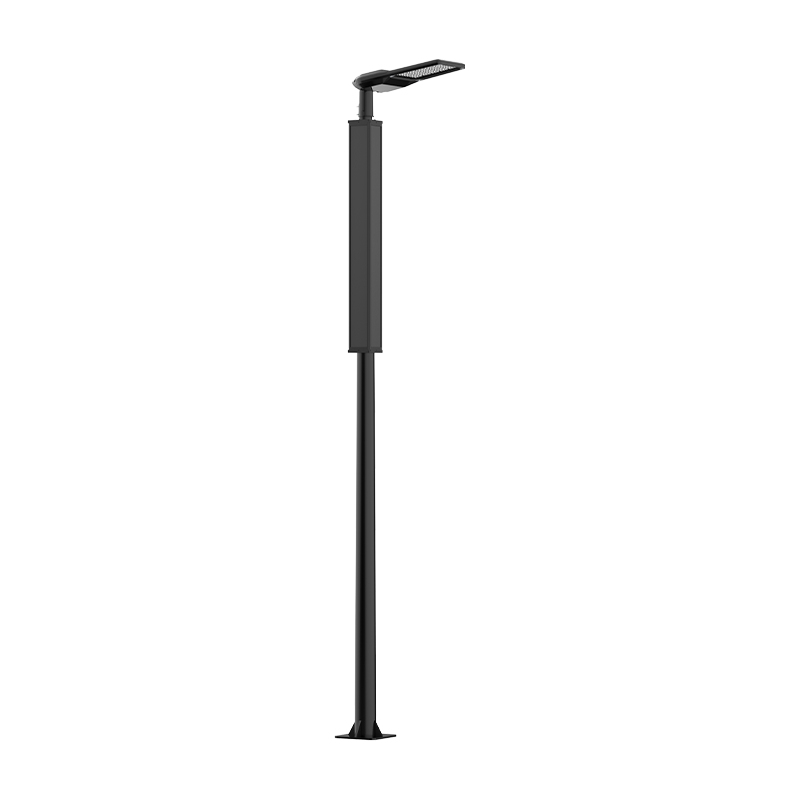
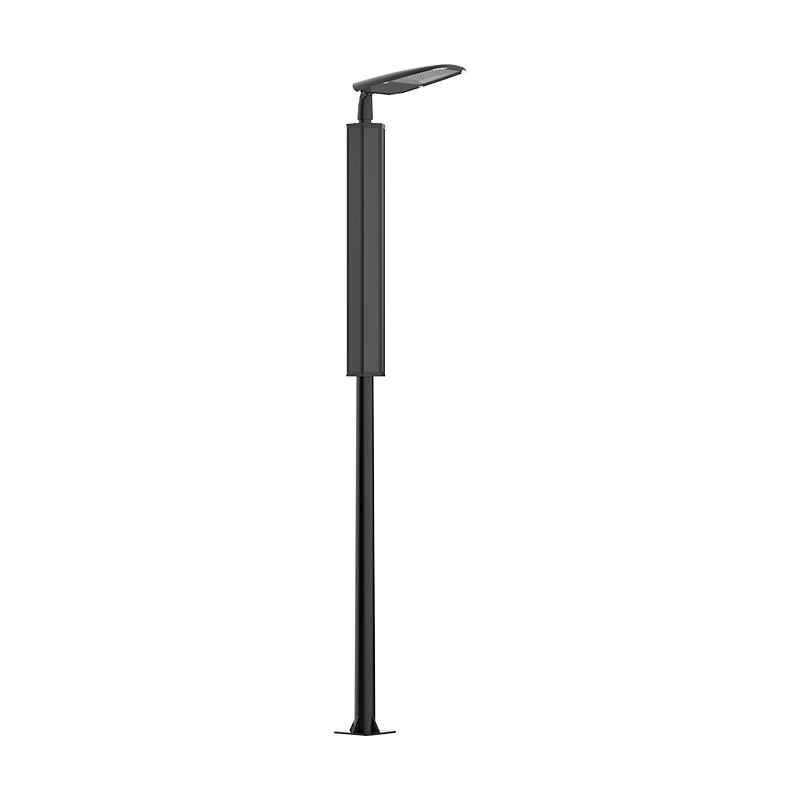
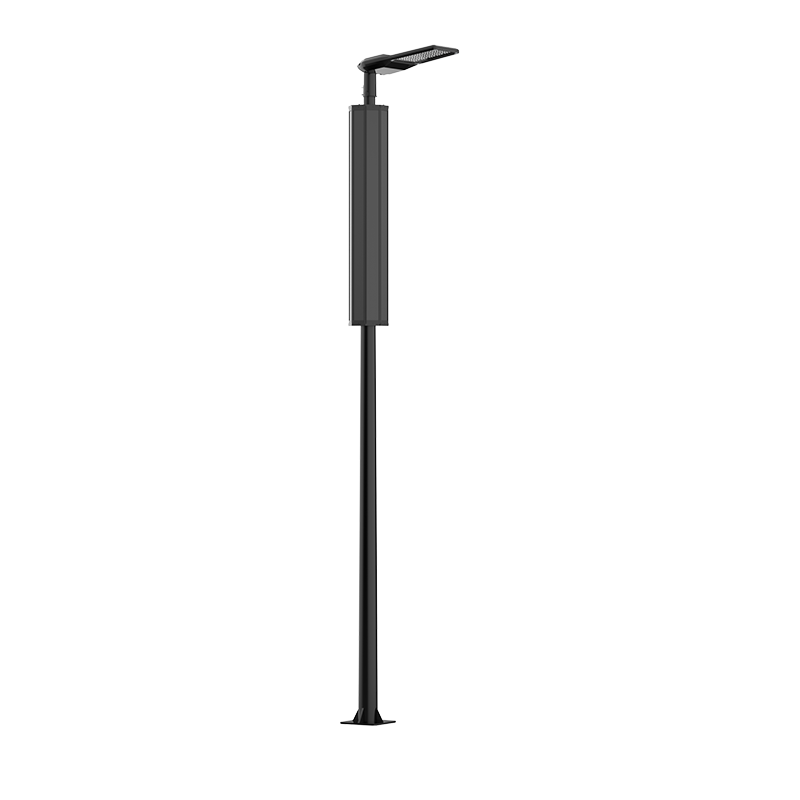
Foldable formats solve a different problem — freight. Panels ship flat and open on site around the shaft, so a 40 ft container carries usable poles instead of a great deal of air. The foldable vertical PV series covers round, hexagonal, quadrilateral and octagonal geometries, with variants keyed to lighting poles, surveillance masts, smart poles and heavy masts.
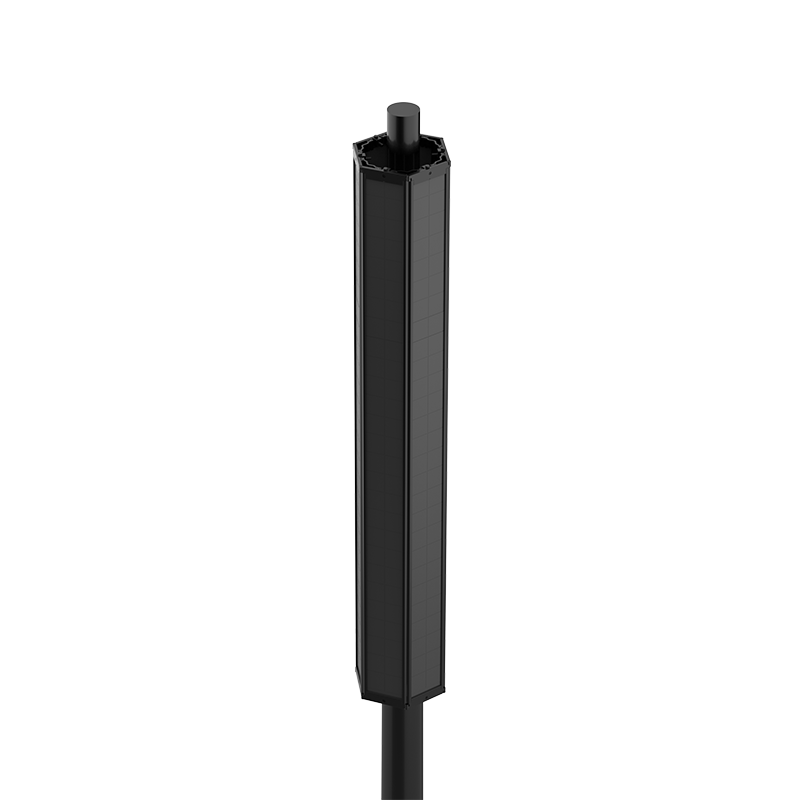 Foldable Hexagonal 114W Smart Pole Solar ModuleA 114 W six-sided pole-mounted PV module that folds for transport and wraps around smart poles for multi-direction collection.View Product →
Specification points for a pole-mounted module
- Added sail area. The module is a wind catcher and belongs in the load case, not in an appendix.
- Bypass diodes and string layout. Half of a pole-mounted panel is often shaded by the arm above it; a string that collapses with one shaded cell wastes the whole array.
- Cable route and gland position. Water enters at the gland, not through the laminate. Route down, never sideways.
- Certification. IEC 61215 and IEC 61730 for the module, plus a defined IP rating for the junction box.
Working the Energy Balance Before You Choose a Module
Start with the load, not the panel. A mid-spec pole with a dimmed luminaire running eleven hours, a gateway and a sensor node has a modest appetite. Add cameras and it climbs. Add a 24-hour radio and the picture changes completely.
Illustrative 24-hour energy demand, mid-spec smart pole
Watt-hours per day, built from the planning ranges in the table above
Now compare that demand with what a vertical array can realistically return. The calculation below is a worked example, not a guarantee: four 76 W modules give 304 Wp, and at 3.2 peak sun hours with 75% system efficiency the array delivers roughly 730 Wh per day. Your own figure depends on latitude, shading and how the modules are oriented around the shaft.
Daily demand versus vertical array output
Wh per day. The dashed line marks 730 Wh from four 76 W modules at 3.2 peak sun hours and 75% system efficiency
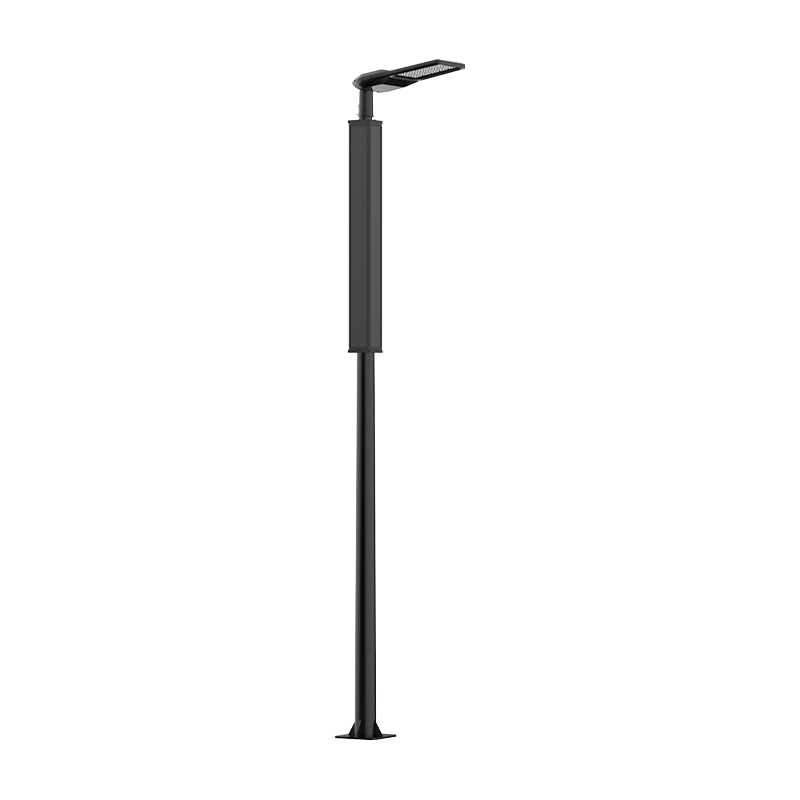 Foldable Quadrilateral 76W Pole-Mounted Solar ModuleA compact 76 W four-sided vertical PV module for small smart poles, lighting columns and sensor posts, with foldable transport and IP66 outdoor construction.View Product →
Read the chart honestly: vertical solar comfortably covers a lighting-and-sensor pole, strains against a two-camera pole in winter, and cannot carry a 24-hour radio without a mains connection, a far larger array, or a hybrid design. That is not a weakness of the technology — it is the reason to size the energy balance before the pole is ordered.
When the load is heavier
Higher-output geometries shift the numbers. A 120 W vertical power module roughly doubles the harvest per mounting position and suits poles where cameras, signage or a small base-station load have to stay online through a cloudy week. Whatever the module, insist on a battery chemistry rated for the cabinet temperature and a depth-of-discharge limit that keeps cycle life realistic; a lithium pack that promises 6,000 cycles at 25 °C will not deliver them at 45 °C.
 Foldable Quadrilateral 120W Vertical Solar Power ModuleA 120 W four-sided pole-mounted PV module for higher-output smart infrastructure, with an extended vertical surface and foldable frame for transport.View Product →
If you are comparing geometries, power classes and mounting hardware across suppliers, our vertical solar PV light pole buying guide lists the ten specifications that most often decide whether a retrofit succeeds.
Controls and Communications: What to Fix in the Specification
The control layer is the hardest part to retrofit, so write it into the purchase order rather than discovering it at commissioning.
- Dimming protocol. DALI D4i, 0-10 V or a fixed internal profile — pick one and state the default schedule, including part-night dimming.
- Socket standard. Zhaga Book 18 or NEMA 7-pin, so controllers can be replaced without changing the luminaire.
- Data model. TALQ or MQTT with a documented payload; a proprietary cloud with no export is a ten-year liability.
- Surge protection. Specify the kA rating at the AC input and at the DC output; coastal and elevated sites need more headroom than inland ones.
- Security basics. No default passwords, signed firmware, and a documented process for replacing a gateway.
Ingress and impact ratings belong in the same clause. IP66 for the luminaire and the cabinet, IK08 for anything within reach of a ladder or a vehicle, and a cable entry that enters from below with a proper gland rather than a drilled hole with sealant.
Procurement Checklist for Importers and Project Buyers
A short list of documents will separate a supplier who has built smart poles from one who has built street lights and added brackets.
- Load-case drawing showing every device, mass, sail area and mounting height.
- Energy balance sheet with stated assumptions for peak sun hours and system losses.
- Battery datasheet with cycle life at realistic cabinet temperatures.
- IP and IK ratings for luminaire, module junction box and cabinet.
- Certificates: EN 40 for the column, IEC 61215/61730 for the module, CE plus GS, TUV, SEMKO, FIMKO or SAA for the electrical assembly.
- Spigot and socket dimensions, so third-party devices remain compatible.
- Factory test report covering insulation resistance, earth continuity and functional dimming.
- Spare-parts list and a written replacement procedure for the controller and the battery.
Manufacturing depth shortens the loop between a drawing change and a shipment. Forland, based in Ninghai, Zhejiang, has produced LED lighting since 2008 with die casting, CNC machining, stamping, powder coating and assembly under one roof, operating to ISO 9001 and holding CE, GS, TUV, SEMKO, FIMKO and SAA certifications, with a TÜV Rheinland audit completed in 2011. An engineering team of eight and in-house tooling mean a modified bracket or a different pole-wall thickness is a production change rather than a third-party negotiation.
Smart Pole FAQs
What is a smart pole used for?
One mast carries lighting, CCTV, small cells, environmental sensors and signage on a shared power feed and data backbone, reducing the amount of street furniture a city has to install and maintain.
How much power does a smart pole need?
Lighting, sensors and controls typically draw 0.5–1.0 kWh a day. Two cameras push that to roughly 1.2 kWh, while a 24-hour 5G radio adds about 1.2 kWh on its own.
Can a smart pole run only on solar power?
Yes for lighting and sensor loads in most climates. A 24-hour radio usually needs a mains connection or an array and battery several times larger than the pole would normally carry.
What wind speed should a smart pole be rated for?
The required wind pressure comes from local code, often EN 40-3 in Europe. What matters is the calculation with every device fitted, not a headline speed on a datasheet.
What is the difference between a smart pole and a normal street light pole?
Structure, power and management. Heavier wall and base plate, provision for cabling and cabinet access, DC distribution with backup, and a gateway that reports faults remotely.
Do foldable vertical solar modules fit an existing light pole?
Often yes, if the wall thickness and base plate can take the added sail area and moment. Retrofit always requires a fresh load calculation, and coastal sites deserve extra margin.