Español



A municipal solar street light that quits at 2 a.m. in its second winter is rarely a failed panel. It is usually an arithmetic failure: a system sized on summer sun and a single day of autonomy, then installed on a road where the fixture must run eleven hours a night through a cloudy January. Solar for street light projects lives or dies on that energy balance, not on the wattage printed on the brochure.
So the short version first: work backwards from the load. Nightly watt-hours, autonomy days, usable battery depth, panel derate and local peak sun hours decide whether the system survives its warranty period. Light levels come second, and they come from the road class rather than from the catalogue. What follows walks through the calculation, the hardware, the standards and the procurement checks that separate a system lasting seven years from one lasting two.
Content
- 1 Step One: Build the Nightly Energy Budget
- 2 What Actually Hangs on the Pole
- 3 Step Two: Let the Road Class Set the Light Level
- 4 Panel Geometry, Tilt and Site Realities
- 5 Procurement Checks That Prevent Field Failures
- 6 Solar Street Light FAQ
- 6.1 How many watts of solar panel do I need for a 60 W street light?
- 6.2 How long do solar street light batteries last?
- 6.3 Can solar street lights work in winter or on cloudy days?
- 6.4 What is the difference between split-type and all-in-one solar street lights?
- 6.5 Do solar street lights need a grid connection or trenching?
- 6.6 What maintenance do solar street lights need?
Step One: Build the Nightly Energy Budget
Multiply fixture watts by operating hours. A 50 W luminaire running 11 hours at full output needs 550 Wh per night. Put it on a dimming profile of 100% for four hours, 60% for four and 30% for three, and demand falls to roughly 415 Wh, a difference worth one battery size class and around 60 W of panel.
Calculated from 11 hours of nightly operation at rated output; dimming, driver losses and standby draw excluded.
Two more numbers complete the budget. Autonomy, the number of consecutive dark days the bank must carry, is usually set at three to five days for municipal work and two to three for private sites. Depth of discharge sets how much of the rated capacity is genuinely usable: lithium iron phosphate banks typically allow 80–90% against roughly 50% for lead-acid, so a lead-acid bank needs close to double the rated capacity for the same delivered energy, plus far more weight and volume mounted at height.
Then the array. Divide daily watt-hours by peak sun hours for the worst month and multiply by a loss factor of 1.3–1.5 for controller efficiency, cabling, temperature derating and dust. A 550 Wh load in a 3.5 peak-sun-hour winter needs roughly 205–235 W of panel, which is exactly why split-type systems exist: that array does not sit neatly on a small luminaire housing.
Ask every supplier for a month-by-month energy balance at your latitude. A quote that states only "8 hours per night" is a guess dressed as a specification.
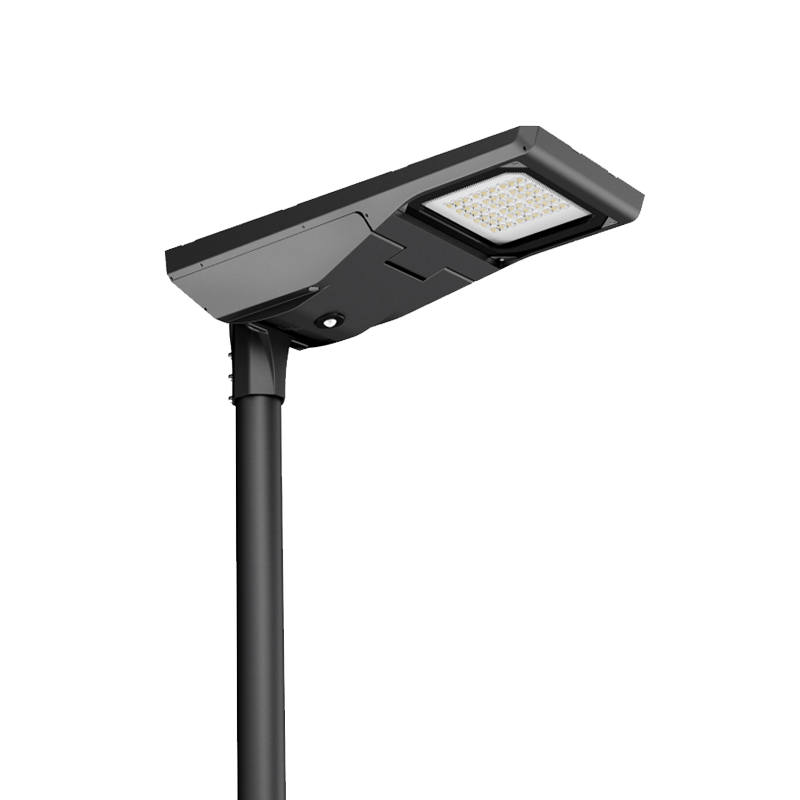
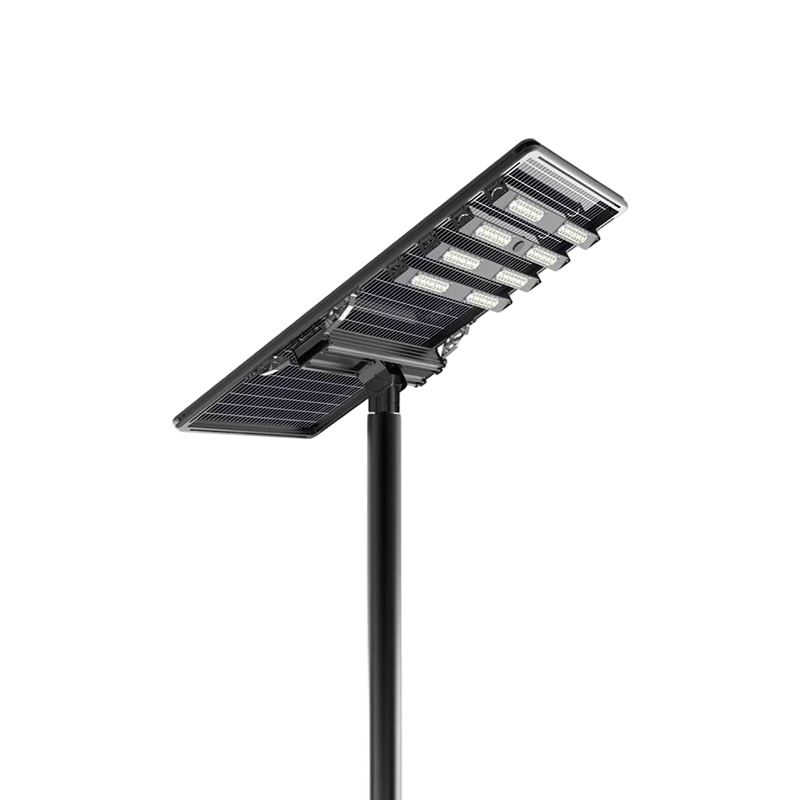 Configurable Modular Solar Street Light for Engineering ProjectsModular solar street light with scalable panel and battery capacity, compartmentalized die-cast aluminum housing, and configurable optics for project-specific energy balances.View Product →
What Actually Hangs on the Pole
Every solar street light is the same five blocks in different clothing: array, charge controller, battery, luminaire and structure. Failures concentrate in three places, the battery compartment, the cable entries and the controller settings.
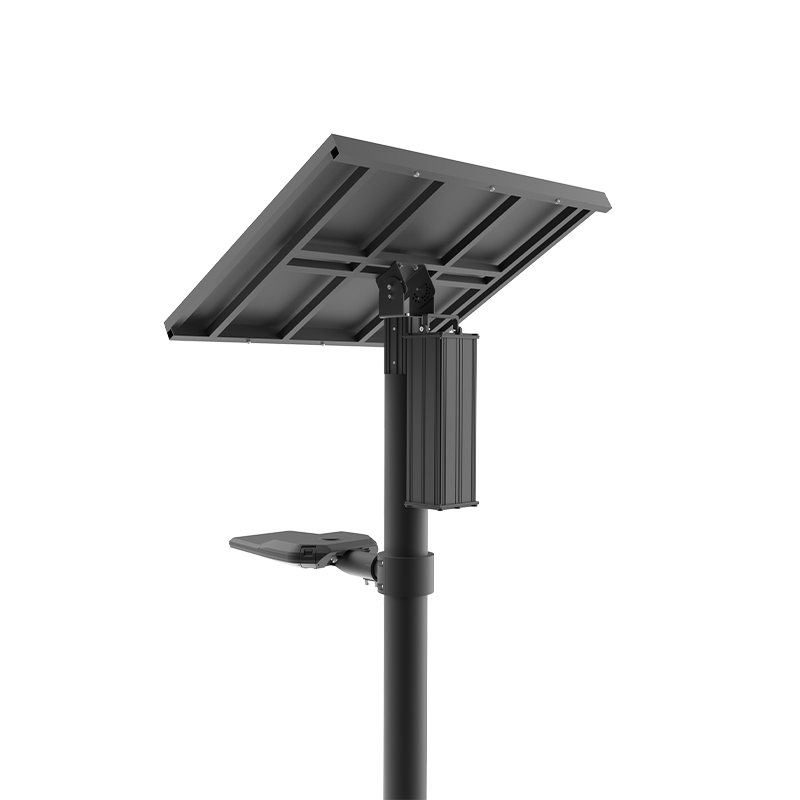
Split-type solar street light anatomy: array, controller, battery enclosure, luminaire, pole and foundation.
Sealed battery enclosures mounted where afternoon sun hits them are a classic mistake. Cell temperature 15°C above ambient can halve calendar life in some chemistries, which is why ventilated or shaded enclosures, and LFP rather than sealed lead-acid, matter more than the datasheet cycle count measured at 25°C. Cable entries facing upward collect water, and controllers left on a generic 12 V profile will over-discharge a bank whose real cut-off should sit higher.
Structure is the block buyers notice last. A 250 W panel adds a couple of square metres of sail area; on a six-metre pole that can double the wind moment at the foundation and forces either a heavier pole section or a smaller array. Pole-mounted foldable and vertical arrays trade some winter yield for a much smaller wind envelope, a narrower footprint in tight streets and hardware that is harder to reach.
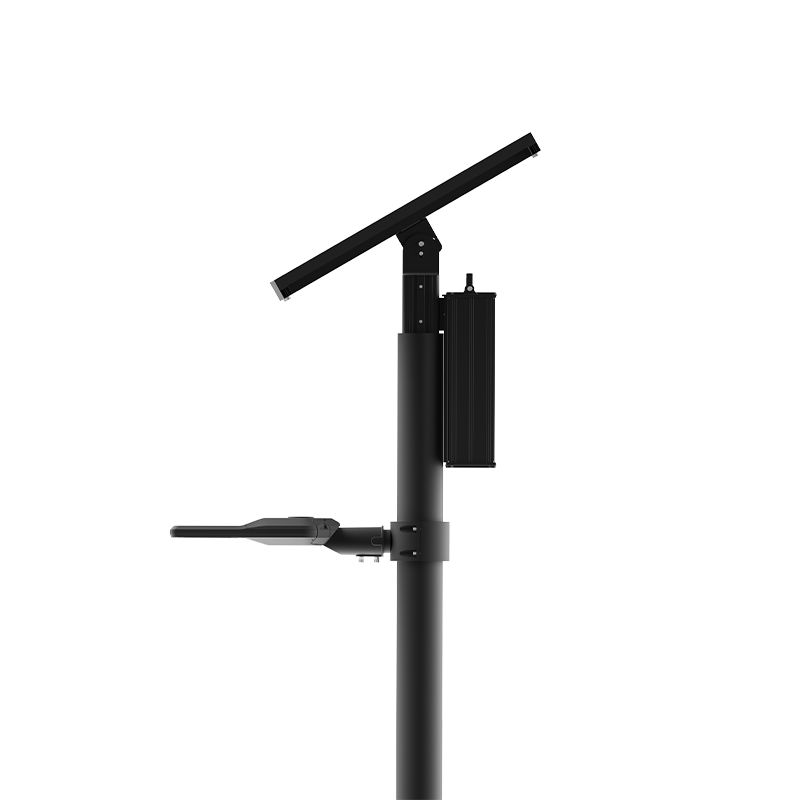 Split-Type Solar Street Light with Slide-Out BatteryModular street light separating panel, luminaire and LiFePO4 battery; slide-out battery compartment and adjustable tilt simplify maintenance and site-specific configuration.View Product →
Step Two: Let the Road Class Set the Light Level
Fixture wattage is an output, not a requirement. Under the European framework, EN 13201-2 assigns lighting classes to road types, and each class carries a minimum maintained average value plus a uniformity ratio. Pedestrian and residential classes are given in lux; traffic routes use luminance classes measured in cd/m².
Minimum maintained average illuminance by class; national annexes may demand a higher class or an ME-class route standard.
| Class | Typical application | Minimum maintained average |
|---|---|---|
| P1 | Busy pedestrian and cycle areas, conflict zones | 15 lx |
| P2 | Moderate pedestrian traffic, town centre footways | 10 lx |
| P3 | Residential through roads, shared footways | 7.5 lx |
| P4 | Residential side streets, parking areas | 5 lx |
| P5 | Low-traffic footpaths, rural links | 3 lx |
| P6 | Low-use areas, security lighting | 2 lx |
Two practical consequences follow. A residential side street at P4 or P5 is often served well by a 30–40 W fixture with a controlled optic, so specifying 100 W "to be safe" inflates the array, battery and pole for no benefit. And uniformity drives pole spacing as much as output does: a bright pool under each head with dark gaps between them fails the class even when the average looks acceptable on paper.
Outside Europe, confirm the governing document before sizing. North American projects typically follow IES RP-8, and many markets publish their own municipal standards. The class, not the catalogue, belongs in the purchase specification.
Panel Geometry, Tilt and Site Realities
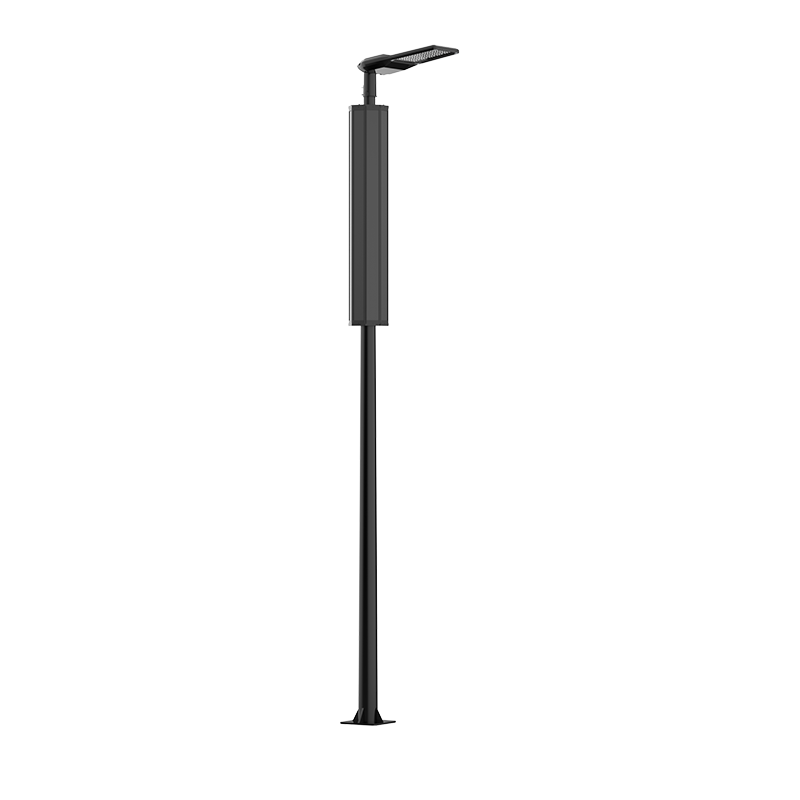
A horizontal top-mounted panel at low tilt is the cheapest arrangement and the weakest in winter, when the sun sits low and flat glass collects dust and snow. Tilting the array toward the equator improves cold-season harvest but raises wind load and visual impact. On urban and heritage-sensitive streets, pole-mounted vertical arrays are increasingly specified because they shrink the wind envelope, keep the glass out of reach and let the same pole carry surveillance or communications equipment.
Shading deserves a site visit rather than an assumption. One tree or building edge crossing the array at 10 a.m. in December can remove more harvest than a 20% panel upgrade would add. Coastal sites add salt spray to the list, which pushes enclosure ratings and fastener materials up a grade.
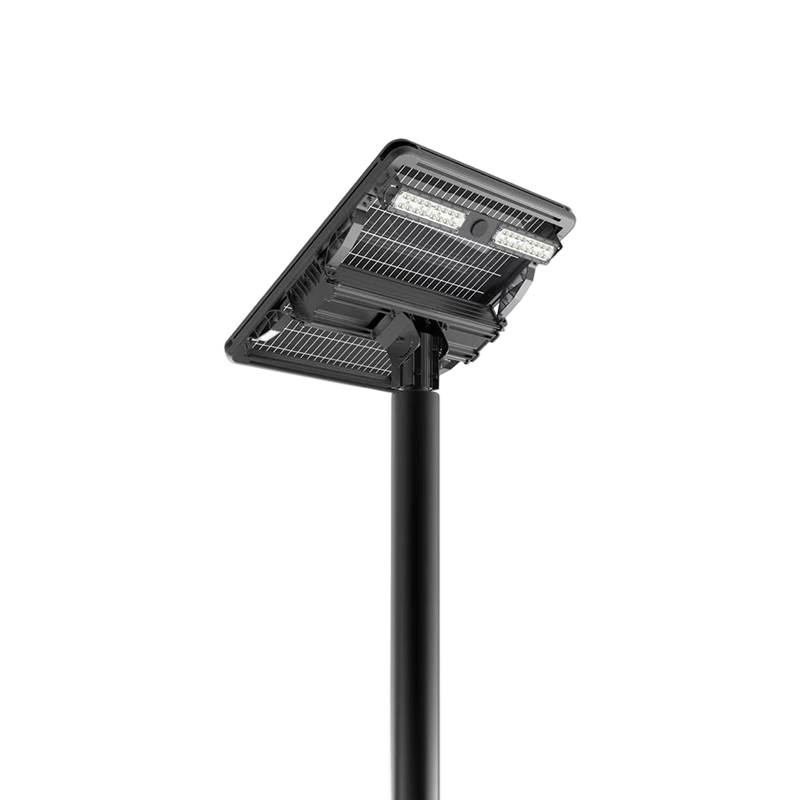
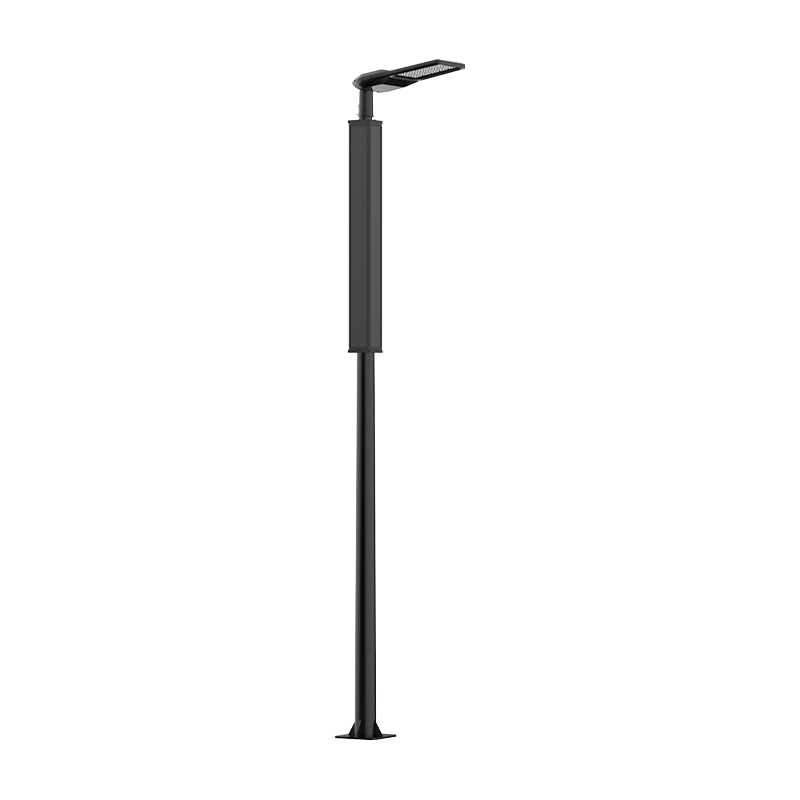 Foldable Quadrilateral Pole-Mounted Solar Module, 76WCompact vertical 76W photovoltaic module with four-sided foldable structure for smart poles and small off-grid loads; IP66 housing suits space-limited outdoor installations.View Product →
Procurement Checks That Prevent Field Failures
These are the items worth writing into the purchase specification, roughly in order of how often they cause callbacks:
- A month-by-month energy balance for the project latitude, not a single nightly-runtime claim.
- Battery chemistry, rated capacity, usable depth of discharge and cycle life at 45°C rather than at 25°C.
- MPPT controller with temperature-compensated charging and a low-temperature charge cut-off for lithium banks.
- IP66 luminaire, IP65 or better battery enclosure with a pressure-equalising vent, and IK08 minimum where vandalism is a risk.
- Certification files that can be verified, such as CE, TÜV, GS, SEMKO or SAA as required by the destination market.
- Warranty split by component, because a five-year luminaire warranty helps little if the battery is covered for twelve months.
Manufacturing depth is a fair proxy for how a supplier handles those points. Forland, for example, runs die casting, CNC machining, stamping, automated painting and assembly in one plant in Ninghai, works to ISO9001 with GS, TÜV, SEMKO, FIMKO, CE and SAA certification, and holds four invention plus twelve utility patents with an engineering team of eight. That kind of vertical integration shortens the loop between a customer's wind-load or battery-compartment concern and the tooling change that fixes it.
For a line-by-line specification checklist, our 12-spec buying guide for contractors covers the details. If you have a live project with a latitude, a road class and a nightly run profile, send those three numbers to our team and the sizing can be checked against a real bill of materials instead of a rule of thumb.
Solar Street Light FAQ
How many watts of solar panel do I need for a 60 W street light?
At 11 hours a night a 60 W fixture needs about 660 Wh. With 3.5 peak sun hours and a 1.4 loss factor that lands near 265 W of panel; in a sunnier climate with 5 peak sun hours, roughly 185 W. Any figure quoted without the sun-hour assumption is incomplete.
How long do solar street light batteries last?
LFP banks typically deliver four to seven years of nightly cycling in a hot enclosure, lead-acid two to three. Enclosure temperature matters more than the label, since every 10°C above 25°C roughly halves life for common lithium chemistries.
Can solar street lights work in winter or on cloudy days?
Yes, provided autonomy is designed into the bank, usually three to five days. Winter cuts both sun hours and panel output, so sizing must use the worst month rather than the annual average.
What is the difference between split-type and all-in-one solar street lights?
All-in-one units pack array, battery and light into one housing, which simplifies installation but concentrates heat and caps panel size. Split-type separates the array, battery and luminaire, allowing larger panels, cooler battery placement and easier maintenance.
Do solar street lights need a grid connection or trenching?
No trenching and no grid supply, which is the main reason they are chosen for parks, rural roads, cycle paths and retrofit projects where civil works cost more than the lighting hardware itself.
What maintenance do solar street lights need?
Array cleaning two to four times a year depending on dust and snow, an annual check of cable glands and battery voltage, and battery replacement around year five. Budget the cleaning, because a soiled panel loses a meaningful share of its output.